To verify a SACCO in Kenya, check its name on the list of licensed SACCOs published by the Sacco Societies Regulatory Authority (SASRA). If it is a smaller SACCO not supervised by SASRA, confirm its registration with the Commissioner for Co-operative Development or your county co-operative office. Then review its audited accounts, by-laws and member feedback before you save or borrow.
Why verifying your SACCO matters
SACCOs are a lifeline for civil servants. They offer affordable loans, dividends and a disciplined way to save through check-off. But not every SACCO is well run. Members have lost savings through poor governance and fraud. The losses reported at the Kenya Union of Savings and Credit Co-operatives (KUSCCO) in 2025 showed how serious the risk can be.
Unlike bank deposits, which are protected by the Kenya Deposit Insurance Corporation (KDIC), SACCO deposits do not currently have the same statutory protection. Checking before you join is your first line of defence.
Who regulates SACCOs in Kenya?
SASRA licenses and supervises deposit-taking SACCOs (those with FOSA or front-office savings services) and larger non-withdrawable deposit-taking SACCOs under the Sacco Societies Act.
The Commissioner for Co-operative Development and county co-operative offices register and oversee other co-operatives, including smaller SACCOs.
7 steps to verify a SACCO before saving or borrowing
Check the SASRA list. SASRA publishes the names of licensed SACCOs on its website and in the Kenya Gazette each year. Match the SACCO’s full registered name, not a shortened brand name.
Confirm registration if it is not on the SASRA list. Ask for the SACCO’s certificate of registration and confirm it with the county co-operative office or the State Department for Co-operatives.
Ask for audited financial statements. A well-run SACCO publishes annual audited accounts and presents them at the AGM. Look at loan defaults, liquidity and whether dividends are paid from real income.
Read the by-laws and loan policy. Understand how much you can borrow (often a multiple of your deposits), interest rates, guarantor rules, and how long withdrawals take.
Check that your check-off deductions are remitted. Compare your payslip deductions with your SACCO statement every few months. Unremitted deductions are a serious warning sign for the employer or the SACCO.
Look for governance red flags. Delayed withdrawals, missed AGMs, frequent board wrangles or pressure to recruit new members are warning signs.
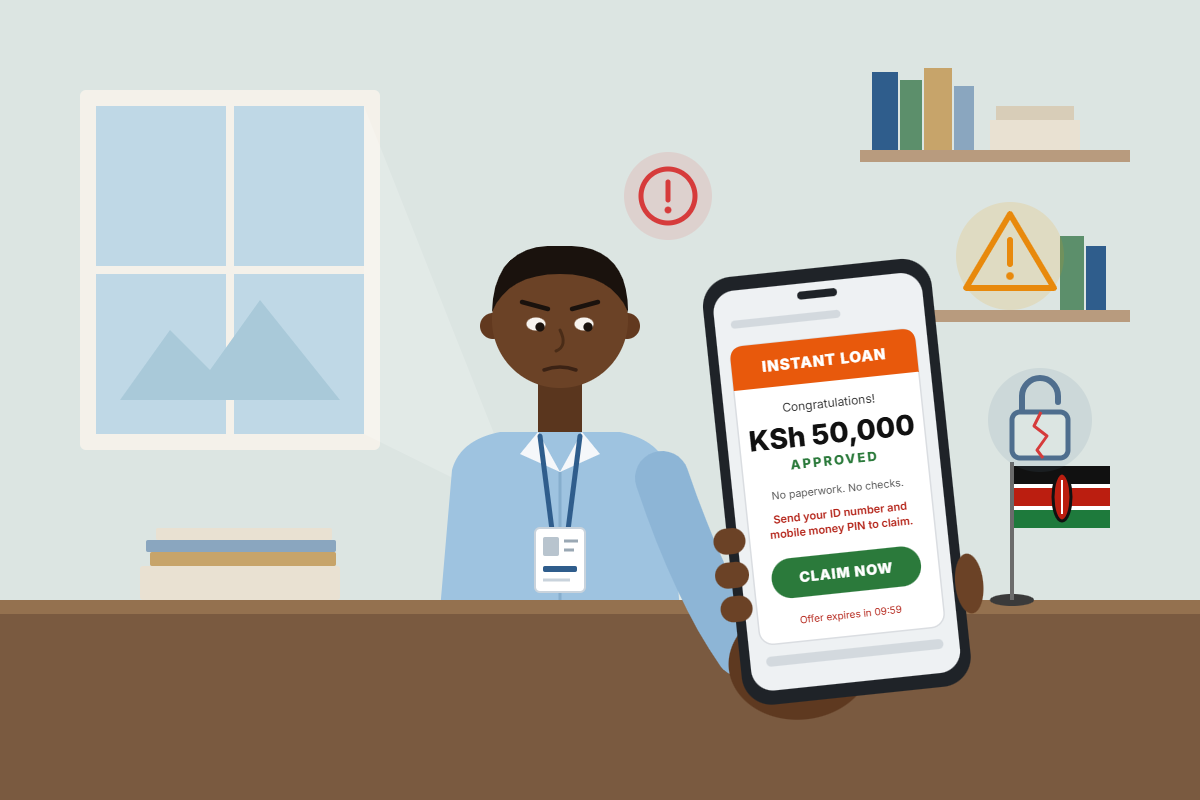
Beware of fake SACCO pages. Fraudsters create social media pages that copy real SACCOs and offer instant loans for a fee. Deal only through official offices, websites and paybill numbers.
What to do if something seems wrong
Raise concerns at the AGM or with the supervisory committee. If they are not resolved, report deposit-taking SACCOs to SASRA and other SACCOs to the Commissioner for Co-operative Development. Report suspected fraud to the police or the DCI.
Frequently asked questions
How do I know if my SACCO is licensed by SASRA? Search its full registered name on the SASRA list of licensed SACCOs, available on the SASRA website.
Are my savings in a SACCO insured? SACCO deposits are not covered by KDIC, which protects bank deposits. That is why checking a SACCO’s licence and financial health matters.
Can a civil servant belong to more than one SACCO? Yes, as long as each SACCO’s by-laws allow it and your total deductions stay within the legal limit on your payslip.
Hela Pesa encourages every member and borrower to verify before they save.
1. Check the Central Bank of Kenya’s official directory
The first step is to visit the CBK website and open its Directory of Digital Credit Providers. The directory lists companies authorised to offer digital credit services in Kenya, alongside details such as their registered names, contact information, physical addresses and licensing dates.
To check a lender:
Visit the CBK website and open the licensed Digital Credit Providers directory.
Find the company’s legal name in the list.
Confirm that the name matches the company identified in the loan app or website.
Compare its contact details and physical address with the information provided by the lender.
Check the directory’s update date and revisit it when necessary.
For example, the CBK directory dated 14 August 2026 lists Hela Capital Limited, licensed on 1 October 2024. You can learn more about Hela Capital and Hela Pesa. Always use the official directory to confirm a provider’s current status rather than relying on screenshots or forwarded lists.
2. Confirm the company’s legal name, not just its app name
A digital lender may operate under a brand name that differs from its registered company name. Therefore, searching only for the name displayed on the app may not give you the correct result.
Check the lender’s website, loan agreement, privacy policy and app information for the legal company name. Compare this with the CBK directory. You can also confirm a company’s registration details through the Business Registration Service.
If the names differ, ask the provider to explain the relationship between the brand and the licensed company. Do not assume that a familiar brand, professional website or popular app is automatically licensed.
Applicable interest rates and how they are calculated.
Processing fees and other charges.
The total cost of credit.
The repayment amount and due date.
Customer complaint-handling channels.
Read the loan agreement before accepting an offer. If a lender advertises an attractive interest rate but does not explain additional fees or the total repayment amount, ask for clarification. See our guide on understanding the total cost of a loan.
As a civil servant, compare the instalment with your take-home salary after statutory deductions, existing loans and essential household expenses. Our loan calculator can help you estimate repayments before you apply.
4. Check how the lender handles your personal information
Digital loan applications may request access to personal information during registration and credit assessment. However, a lender should only collect information reasonably required for credit appraisal, approval, disbursement and collection.
Be cautious if an app requests unnecessary access to your contacts, photographs or other personal information. Never share your M-Pesa PIN, mobile banking password or one-time verification codes with anyone claiming to process your loan. Read more in our guide on protecting yourself from loan fraud.
5. Watch out for warning signs of unlicensed lenders
Some warning signs include:
Promises of guaranteed loans without proper assessment.
Requests for upfront payments to unlock or approve a loan.
No identifiable company name or verifiable contact details.
Unclear interest rates, fees or repayment conditions.
Threats, intimidation or harassment during debt collection.
Pressure to install applications from unfamiliar links.
An app’s presence on Google Play or the Apple App Store does not establish that its operator is licensed by CBK. If you cannot verify the company against the CBK directory, pause the application and seek clarification.
6. Know where to report suspicious lending practices
If you suspect that a digital lender is operating without the required authorisation or engaging in unfair practices, preserve relevant evidence, including messages, payment requests, screenshots and loan agreements.
No. Not every loan app is necessarily licensed. Some credit providers may be regulated under other applicable laws, but a digital lender subject to the CBK DCP licensing framework must meet the relevant requirements.
Can a licensed digital lender charge interest and fees?
Yes. However, applicable interest rates, fees, charges and the total cost of credit should be clearly disclosed before the borrower accepts the loan, as required by the CBK (Digital Credit Providers) Regulations, 2022.
What should I do if a loan app threatens or harasses me?
Keep records of the communication and report the conduct through the lender’s complaint channel, the Central Bank of Kenya or, where your personal data has been misused, the ODPC.
Make informed borrowing decisions
Checking a lender’s license is an important first step towards responsible borrowing. Civil servants should also compare loan costs, understand repayment obligations and assess affordability before committing to credit.
Hela Pesa encourages borrowers to make informed financial decisions. If you are considering a salary-based loan, review the eligibility requirements, applicable charges and repayment terms before applying. Borrow only what you can comfortably repay without compromising essential household expenses.
County employees in Elgeyo Marakwet earn salaries based on their job groups, professional grades, responsibilities and applicable public service remuneration guidelines. In addition to basic pay, eligible employees may receive allowances such as house, commuter, leave, hardship and acting allowances, depending on their roles and working conditions.
Understanding how these payments work can help county employees in Iten, Kapsowar, Tambach, Chepkorio and other parts of Elgeyo Marakwet plan their finances, review their payslips and make informed borrowing decisions.
How much do county employees in Elgeyo Marakwet earn?
There is no single salary that applies to all Elgeyo Marakwet County employees. Monthly earnings depend on an employee’s assigned job group or grade, salary scale, experience, position and applicable remuneration structure.
The county’s Human Resource Policies and Procedures Manual provides that public service salaries are based on grading levels outlined in career progression guidelines and advice issued by the Salaries and Remuneration Commission (SRC).
Under the framework, newly appointed employees generally enter at the minimum point of their respective salary scales. However, approved relevant previous experience may qualify an employee for incremental credit, subject to the maximum salary for the assigned grade.
This means two employees working for the county may earn different salaries even when they have similar responsibilities, particularly if they belong to different grades or have different recognised experience.
For the most accurate figure, employees should check their appointment letters, current salary scales and confirmation from the county human resource or payroll office.
What allowances do Elgeyo Marakwet County employees receive?
Allowances supplement an employee’s basic salary or compensate them for specific work-related responsibilities and conditions. Eligibility and rates depend on the applicable SRC guidelines and the county’s approved policies.
Common allowances include:
1. House allowance
House allowance helps employees meet accommodation expenses. The county’s draft HR manual provides for house allowance according to an employee’s grade and the applicable SRC circulars. Employees occupying institutional housing may be subject to different arrangements.
2. Commuter allowance
Commuter allowance helps eligible employees meet the cost of travelling between home and their workplace. The county’s draft manual links eligibility to job group and whether county transport is provided.
3. Leave allowance
Eligible employees receive leave allowance, generally once a year, at rates determined by SRC. The county’s draft manual also provides for specific arrangements for employees in designated hardship areas who take their leave entitlement.
4. Hardship allowance
Employees deployed to designated hardship areas may qualify for hardship allowance. Eligibility depends on the official designation of the work station and applicable SRC rates. Living or working in a particular part of Elgeyo Marakwet does not automatically guarantee eligibility.
5. Acting allowance
An employee formally appointed to perform duties in a higher position may qualify for acting allowance, subject to the required approvals and conditions. The county’s published draft HR manual outlines an acting allowance provision, but employees should confirm the current applicable rate and approval requirements with Human Resources.
Other payments may include subsistence, field, overtime, special duty and transfer allowances, where applicable.
How can you check your salary and allowances?
Your payslip provides a useful breakdown of your monthly earnings and deductions. To understand your compensation, check:
Basic salary: Your earnings before allowances and deductions.
Allowances: Payments attached to your grade, responsibilities or approved work circumstances.
Gross salary: Your basic salary plus applicable allowances.
Statutory deductions: Applicable taxes and mandatory contributions.
Other deductions: Approved loans, insurance or other authorised deductions.
Net salary: The amount credited to your bank account after deductions.
If an expected allowance is missing or your salary appears inconsistent with your appointment terms, request clarification from your departmental HR office or payroll section.
How can county employees manage their salaries better?
Knowing your gross salary is only the first step. Effective financial planning starts with understanding your take-home pay and how much remains after essential expenses.
Consider preparing a monthly budget that accounts for housing, food, transport, school fees, utilities, savings and existing loan repayments. Avoid treating occasional payments, such as leave or subsistence allowances, as guaranteed monthly income.
If you are considering a salary advance or personal loan, compare the total repayment amount, applicable charges and repayment period before committing. Choose a facility that fits your disposable income without compromising essential household expenses.
Hela Pesa provides salary-based financial solutions for eligible salaried employees. Before applying, review the product terms and ensure the repayments are affordable.
Frequently Asked Questions
Do all Elgeyo Marakwet County employees receive house and commuter allowances? Not necessarily. Eligibility and rates depend on an employee’s grade, applicable SRC guidance and whether relevant benefits, such as county transport or institutional housing, are provided.
Does working in Elgeyo Marakwet qualify an employee for hardship allowance? No. Hardship allowance applies to officially designated hardship areas and eligible employees, subject to applicable SRC guidelines.
Where can I confirm my current county salary scale? Contact your departmental HR or payroll office and consult the County Public Service Board and SRC for the applicable salary structure and circulars.
Editorial note: Allowance descriptions above draw on the county’s published draft HR manual and should be read alongside current SRC guidance and approved county policies. Individual entitlements and rates may change.
To avoid January financial stress, civil servants should confirm their December pay date, set aside January essentials such as school fees and rent before spending, set a fixed festive budget, book travel early, share costs for family gatherings, avoid festive loans, and plan for the long gap until the January salary.
Why is January so hard for Kenyan workers?
January brings a perfect storm. December salaries are sometimes paid earlier than usual so workers can travel and celebrate, which stretches the wait until the next payday. At the same time, school fees, uniforms, books, rent and transport back to work all fall due in the first weeks of the year.
With a plan made now, the festive season can be enjoyable without a painful January.
7 ways to avoid January financial stress
Confirm your December pay date. Ask your HR or payroll office when December salary will be paid. Then count the days to your January payday. That number tells you how far your money must stretch.
Set aside January essentials first. Before buying a single gift, move money for school fees, uniforms, books, rent and January transport into a separate account or your SACCO. Treat this money as already spent.
Set a festive budget and stick to it. Decide a fixed amount for food, gifts, travel and outings. Write it down and track spending daily. When the festive budget runs out, the celebration spending stops.
Book travel early and travel smart. Bus and matatu fares often rise in the days just before Christmas. Book upcountry tickets early, travel on quieter days, or share a car with relatives heading the same way.
Share costs for family gatherings. Agree with siblings and relatives on who brings what. A shared contribution for the Christmas meal is easier on everyone than one person footing the bill.
Avoid festive loans. Borrowing for celebrations means starting the new year with debt and a smaller payslip. If you must borrow for a genuine need, use a licensed lender, know the total cost and plan repayment around your January salary.
Start your 2027 festive savings now. Open a holiday savings account or set a small monthly SACCO deposit for next December. Saving a little each month removes the pressure next year.
Simple gift ideas that cost less
Gifts do not have to be expensive to be meaningful. Consider:
Home-cooked food or baked goods
Practical school items for children in the family
Shared experiences such as a family picnic or visit to a park
Setting a gift limit or doing a family gift exchange instead of buying for everyone
A sample January checklist
Before you spend on festivities, confirm you have money set aside for:
School fees and school supplies
Rent and utility bills
Transport back to work and daily commuting
Loan repayments and SACCO deposits
Food until the January payday
Frequently asked questions
How much should I spend on Christmas? There is no fixed rule. Spend only what remains after January essentials and savings are set aside.
Is it wise to take a loan for Christmas? Generally, no. Festive borrowing increases January stress. Borrow only for genuine needs, from a licensed lender.
How can I start saving for next Christmas? Set up a small automatic monthly deposit in a SACCO or savings account, starting in January.
Hela Pesa wishes you a joyful and financially calm festive season.
Civil servants can manage rising food and transport costs in 2026 by budgeting from net pay, buying staples in bulk from markets or wholesalers, planning weekly meals, sharing commutes, timing fuel purchases around EPRA’s monthly price review, and keeping an emergency fund so they do not borrow for everyday needs.
Why does the cost of living keep rising?
Food and transport take the biggest share of most Kenyan household budgets. Their prices move with fuel costs, weather, the exchange rate and taxes. The Kenya National Bureau of Statistics (KNBS) tracks these changes every month through the Consumer Price Index. The Energy and Petroleum Regulatory Authority (EPRA) reviews maximum pump prices every month, and fuel changes quickly feed into matatu fares and food prices.
Kenya‘s annual headline inflation stands at 7.3% for October 2026, while current maximum retail fuel prices in Nairobi are KSh 226.96 for Super Petrol, KSh 227.76 for Diesel, and KSh 219.87 for Kerosene.
KNBS Consumer Price Index (CPI) Release
Headline Inflation Rate. Kenya’s annual consumer price inflation rose to 7.3% in October 2026, up from 6.8% in September 2026.
CPI Index Movement. The overall Consumer Price Index increased by 0.7% month-on-month, moving from 156.47 in September 2026 to 157.60 in October 2026.
Core vs. Non-Core Inflation. Core inflation stood at 4.3% (up from 4.0% in September), while non-core inflation reached 15.1% (up from 14.0%).
Primary Drivers. Year-on-year price increases were largely driven by Transport (17.1%), Food and Non-Alcoholic Beverages (10.2%), and Housing, Water, Electricity, Gas and Other Fuels (3.7%).
EPRA Pump Prices (Nairobi)
The Energy and Petroleum Regulatory Authority (EPRA) released its latest pricing review on November 14, 2026. The rates remain unchanged from the previous cycle and are effective from November 15, 2026, to December 14, 2026:
Fuel Product
Nairobi Maximum Retail Price (per litre)
Change from Previous Cycle
Super Petrol (PMS)
KSh 226.96
KSh 0.00 (Unchanged)
Diesel (AGO)
KSh 227.76
KSh 0.00 (Unchanged)
Kerosene (IK)
KSh 219.87
KSh 0.00 (Unchanged)
Note: All listed EPRA retail prices are inclusive of 8% Value Added Tax (VAT).
For civil servants on fixed salaries, even small price rises can squeeze take-home pay, especially after statutory deductions and loan repayments.
Start with a net-pay budget
Budget from what lands in your account, not your gross salary. A simple guide:
Needs (about 50–60%): rent, food, transport, school fees, utilities
Adjust the shares to your situation, but always set aside savings first.
How to reduce food costs
Plan meals weekly. A weekly menu prevents impulse buying and food waste.
Buy staples in bulk. Maize flour, rice, beans, sugar and cooking oil are often cheaper from wholesalers or open-air markets. Split bulk buys with colleagues or neighbours.
Buy in season. Seasonal fruits and vegetables cost less and taste better.
Cook in batches. Cooking beans or githeri in large batches saves fuel and time.
Grow what you can. A small kitchen garden or sack garden can supply sukuma wiki, spinach and herbs.
Pack lunch. Carrying lunch three days a week can save a significant amount each month.
How to reduce transport costs
Share the commute. Carpool with colleagues who live nearby and split fuel costs.
Plan around fuel reviews. EPRA announces new pump prices mid-month. If you drive, fill up before an expected increase.
Walk or cycle short distances. It saves fares and improves health.
Combine errands. One planned trip costs less than several small ones.
Track your fares. Many people underestimate what they spend on matatus and boda bodas. Record every trip for one month.
Avoid borrowing for daily needs
Using mobile loans or Fuliza to buy food or pay fares is a warning sign. The fees compound, and next month’s salary starts smaller. Build an emergency fund of at least one month’s expenses, held in a SACCO or money market fund, so a price spike does not push you into debt.
If you must borrow, choose a licensed lender, compare the full cost, and match repayments to your payday.
Frequently asked questions
What is the biggest expense for most Kenyan households? Food, followed by housing and transport, takes the largest share of household spending in the KNBS consumer basket.
How often do fuel prices change in Kenya? EPRA reviews maximum pump prices every month, usually announced mid-month.
Should I use a loan to cover rising costs? Only for genuine emergencies. Regular borrowing for food or transport points to a budget gap that needs fixing.
Hela Pesa supports salaried employees with responsible credit for emergencies, not everyday spending.
A Warrant Officer Class Two (WO2) in the Kenya Defence Forces (KDF) earns an estimated basic salary of KSh 55,000 to KSh 75,000 per month in 2026. With house, hardship and other allowances, gross monthly pay typically ranges from about KSh 80,000 to KSh 110,000, depending on years of service and duty station.
What Is a Warrant Officer Class Two in KDF?
A Warrant Officer Class Two is the second-highest non-commissioned rank in the Kenya Defence Forces. It sits above Senior Sergeant and below Warrant Officer Class One (WO1).
WO2s are senior soldiers with long service and deep experience. Many serve as Company Sergeant Majors, responsible for discipline, welfare and day-to-day administration of a company of soldiers. They are the link between junior soldiers and commissioned officers.
How Much Is the Basic Salary of a WO2 in KDF?
The estimated basic salary of a WO2 in KDF is KSh 55,000 to KSh 75,000 per month. KDF does not publish its full pay scales, so the figures below are approximate ranges based on commonly reported estimates.
A WO2’s allowances depend on where they are posted and what duties they perform. The main ones are:
House allowance: For soldiers not living in military quarters, with higher rates in towns like Nairobi and Mombasa.
Commuter allowance: Covers transport for those living outside the barracks.
Hardship allowance: Paid for postings in remote or arid areas, such as northern and north-eastern Kenya.
Operational allowance: Paid during active internal security or border operations.
Peacekeeping mission allowance: Extra pay for WO2s deployed on African Union or United Nations missions, often one of the biggest income boosts.
Leave allowance: Paid once a year when the soldier takes annual leave.
What Other Benefits Does a WO2 Enjoy?
Beyond cash pay, a WO2 gets free medical care for themselves and registered dependants through military health facilities, including the Defence Forces Memorial Hospital. Many live in subsidised military housing.
WO2s can shop at KDF duty-free canteens, which sell goods below market prices. They also qualify for career training, a military pension on retirement, and membership in Ulinzi Sacco for savings and affordable loans.
What Is the Take-Home Pay of a WO2 in KDF?
A WO2 on a gross salary of about KSh 95,000 could take home roughly KSh 70,000 to KSh 78,000 per month. Statutory deductions include PAYE income tax, the Social Health Insurance Fund (SHIF) contribution and the Affordable Housing Levy. Sacco savings and loan repayments reduce net pay further.
If you are planning your finances around a KDF salary, take a look at Hela Pesa’s products.
How Long Does It Take to Become a WO2 in KDF?
It usually takes about 15 to 20 years of service to reach WO2. A soldier who joins KDF through general recruitment rises through Private, Lance Corporal, Corporal, Sergeant and Senior Sergeant first. Promotion depends on performance, completed career courses and available vacancies.
The next step is Warrant Officer Class One, often in the role of Regimental Sergeant Major, which brings higher pay and greater responsibility.
Frequently Asked Questions
Is a Warrant Officer Class Two a commissioned officer? No. A WO2 is a senior non-commissioned officer. Commissioned ranks start at Second Lieutenant.
Who earns more, a WO2 or a Lieutenant? A Lieutenant usually earns a higher basic salary, though a long-serving WO2 with allowances can earn a comparable gross amount.
What is the difference between WO1 and WO2 in KDF? WO1 is the higher rank. WO1s earn more and often serve as Regimental Sergeant Majors, while WO2s typically serve as Company Sergeant Majors.
Does a WO2 get a pension? Yes. WO2s qualify for a military pension on retirement, based on their length of service and final pay.
Sources and Further Reading
KDF salary scales are not fully public and are reviewed periodically. The figures in this article are estimates; confirm current rates with official sources:
November has become a major shopping month in Kenya, with retailers offering discounts on electronics, household appliances, fashion, furniture and other everyday products. For civil servants, Black November can be an opportunity to purchase essential items at reduced prices before the festive season.
However, attractive promotions can also encourage impulse buying, unnecessary borrowing and overspending. The key is knowing how to distinguish a genuine bargain from a purchase that puts pressure on your finances.
How can civil servants shop smart during Black November? Start with a realistic budget, compare prices across trusted retailers, prioritise essential purchases and avoid using credit for items you cannot comfortably afford.
What Is Black November, and When Is Black Friday in Kenya?
Black November refers to promotional shopping campaigns that retailers run throughout November, often leading up to Black Friday. In 2026, Black Friday falls on 27 November, followed by Cyber Monday on 30 November. Some Kenyan retailers extend their promotions across several weeks.
Offers may include discounts, product bundles, flash sales and limited-time promotions. While these deals can provide savings, the advertised percentage discount does not always represent the best available price.
1. Set a Shopping Budget Before Browsing
One of the easiest ways to overspend is to start shopping without deciding how much you can afford.
Before opening shopping apps or visiting stores, review your November salary and identify your essential expenses. These may include rent, food, transport, school fees, utilities, savings and existing loan repayments.
Next, decide how much you can comfortably allocate to Black November purchases.
A simple shopping budget can help:
Budget category
Example allocation
Essential household purchases
KSh 5,000
Personal shopping
KSh 2,000
Gifts and festive preparation
KSh 2,000
Emergency savings
KSh 3,000
Total planned allocation
KSh 12,000
Illustrative figures only. Adjust the amounts to your income and financial commitments.
2. Compare Prices Before Buying
A product advertised at 40% off is not automatically a good deal. Some discounts are calculated against prices that may not reflect what the product normally sells for.
Compare the same product across different retailers before making a purchase. Check the exact model, specifications, warranty, delivery fees and return conditions.
The Competition Authority of Kenya (CAK) protects consumers against false and misleading representations, including misleading product and pricing claims. Its consumer protection guidance explains how consumers can raise complaints about unfair business practices.
3. Prioritise Needs Over Wants
Black November promotions can make almost every product look essential. However, buying something simply because it is discounted can undermine your financial goals.
For example, replacing a faulty refrigerator or buying a laptop needed for work may be a worthwhile purchase. Buying another phone when your current one works perfectly may not be necessary.
Before checking out, ask yourself:
Did I plan to buy this item before the promotion?
Does it solve a genuine need?
Can I afford it without borrowing unnecessarily?
Will buying it affect my January budget?
If the purchase is not a priority, consider postponing it.
4. Avoid Unnecessary Borrowing to Fund Shopping
Using mobile loans, Fuliza or salary-based credit to finance non-essential purchases can turn a discount into an expensive commitment.
Before borrowing, calculate the total amount repayable, including interest and fees. Consider how the instalments will affect your next salary and existing financial obligations.
If you need financing for an essential expense, compare available options carefully. Hela Pesa offers salary-based financial solutions to eligible civil servants and salaried employees. Review the applicable terms, repayment period and total cost before applying.
Not every Black November promotion advertised on social media is genuine. Fraudsters may impersonate established retailers, advertise unrealistic discounts or request deposits through personal mobile-money numbers.
The National Computer and Cybercrimes Coordination Committee advises shoppers to verify sellers, check payment details and avoid suspicious links.
To protect yourself:
Buy from verified retailers and established marketplaces.
Check independent customer reviews and seller information.
Confirm the recipient’s name before approving an M-PESA payment.
Never share your M-PESA PIN, passwords or one-time verification codes.
Read delivery, warranty and refund policies before paying.
December celebrations are often followed by school fees, shopping for school supplies, rent and other household expenses. Spending most of your November salary during promotional campaigns can leave you financially stretched when the new year begins.
Set aside money for January expenses before allocating funds to festive shopping. Keeping your savings separate from your shopping budget can help prevent accidental overspending.
Frequently Asked Questions
Is Black November shopping worth it in Kenya?
Yes, if you purchase items you genuinely need at prices that compare favourably with other retailers. Researching prices and setting a budget helps you identify worthwhile deals.
How can civil servants avoid overspending during Black November?
Prepare a shopping list, set a spending limit, compare prices and avoid borrowing for unnecessary purchases. Protect money reserved for essential bills and January expenses.
Should I use a mobile loan to take advantage of Black November deals?
Only consider borrowing after assessing affordability and the total cost of credit. A discount is rarely worth taking on debt for something you do not need.
Final Thoughts
Black November can help civil servants save money, but successful shopping requires more than finding the biggest discount. Planning your purchases, comparing prices, avoiding unnecessary credit and protecting your January budget can help you enjoy the promotions without creating financial pressure.
At Hela Pesa, we encourage responsible financial decisions. Remember, the best deal is one that meets your needs, fits your budget and does not compromise your financial wellbeing.
A Lieutenant in the Kenya Defence Forces (KDF) typically earns a basic salary of roughly KSh 70,000 to KSh 95,000 a month, with allowances pushing gross pay well above KSh 100,000 for many officers.
The rank of Lieutenant is the second rung of the commissioned officer ladder in the Kenya Army, Kenya Air Force and Kenya Navy (where the equivalent is Sub-Lieutenant). Officers usually reach it after graduating from the Kenya Military Academy in Lanet as Second Lieutenants and serving about two to three years. For many young Kenyans weighing a military career, this is the first rank where pay starts to feel competitive with the civilian graduate job market.
Basic Salary
KDF pay is set by the Defence Council and reviewed periodically, and the official scales are not published in full. The figures below are approximate ranges drawn from commonly reported estimates, so treat them as a guide rather than an official pay slip.
Rank
Approx. basic pay (KSh/month)
Approx. gross with allowances (KSh/month)
Second Lieutenant
55,000 – 75,000
80,000 – 110,000
Lieutenant
70,000 – 95,000
100,000 – 140,000
Captain
90,000 – 120,000
130,000 – 180,000
Within the Lieutenant rank, pay rises in annual increments, so an officer in their third year at the rank earns more than one newly promoted. Specialist officers such as doctors, engineers and pilots often sit at the top of the range or above it because of professional allowances. To compare with non-commissioned ranks, see our guide to salaries and allowances for a Sergeant in the Kenya Defence Forces.
Allowances
Allowances are where a Lieutenant’s pay can change sharply, depending on where they are posted and what they are doing.
House allowance: Paid to officers who are not living in military quarters. The amount varies with the duty station, with higher rates in cities such as Nairobi and Mombasa.
Commuter allowance: Helps cover transport costs for officers who live outside the barracks.
Hardship allowance: Paid for postings in difficult areas, such as parts of North Eastern Kenya, the northern frontier counties and border zones.
Operational allowance: Paid when officers are deployed in active operations, such as security operations along the coast and the Somalia border.
Peacekeeping mission allowance: Officers deployed on African Union or United Nations missions receive extra pay on top of their salary. This has historically been one of the most significant boosts to a soldier’s income, though the rates depend on the mission’s funding.
Leave allowance: Paid annually when officers take their leave.
Professional allowances: Doctors, engineers, lawyers and other specialists commissioned into the forces receive extra pay linked to their qualifications.
Benefits Beyond the Pay Slip
The true value of a KDF career goes beyond cash. Officers and their registered dependants get medical care through military health facilities, including the Defence Forces Memorial Hospital in Nairobi, which saves a family thousands of shillings a year.
Many officers live in subsidised military housing, and those in barracks enjoy meals and basic amenities at low cost. KDF duty-free canteens sell household goods, electronics and other items at prices well below the open market.
Officers also have access to sponsored training, both locally and abroad, and a pension on retirement under the military pension scheme. Many join Ulinzi Sacco, which offers savings and affordable loans tailored to service members.
Deductions and Take-Home Pay
Like other salaried Kenyans, KDF officers pay PAYE income tax, the Social Health Insurance Fund (SHIF) contribution and the Affordable Housing Levy. Sacco savings, loan repayments and welfare contributions come off the top as well.
After these deductions, a Lieutenant on a gross of about KSh 120,000 could expect a take-home figure in the region of KSh 85,000 to KSh 95,000, depending on loans and voluntary savings. Officers on missions or hardship postings can take home considerably more. If you are planning your finances around a KDF salary, take a look at Hela Pesa’s products.
Moving Up: From Lieutenant to Captain
Promotion from Lieutenant to Captain usually comes after about three to four years, subject to good performance reports, completion of required career courses and available vacancies. Each step up brings a higher pay scale and better allowances, and the jump grows larger at senior ranks such as Major and Lieutenant Colonel.
For anyone eyeing a commission, the Lieutenant rank offers a solid starting income, strong job security and benefits that are hard to match in the private sector. The pay may not rival top corporate salaries, but subsidised housing, free medical care, duty-free shopping and a guaranteed pension make the overall package attractive.
Note: KDF salary scales are not fully public and are reviewed from time to time. The figures in this article are estimates; confirm current rates with the Ministry of Defence or official KDF recruitment notices.
Sources and Further Reading
The salary ranges above are estimates and are not taken from a single official pay scale. Readers can check current, official information with these bodies:
A Sergeant in the Kenya Defence Forces (KDF) is a non-commissioned officer (NCO) who plays an important role in supervising service members, maintaining discipline and supporting military operations. The monthly salary of a KDF Sergeant depends on the applicable military pay structure, salary point, years of service and authorised allowances.
However, the Ministry of Defence does not publish a comprehensive, up-to-date salary table showing the exact monthly earnings for every KDF rank. This means that salary figures circulating online should be treated as estimates unless supported by an official Defence Council or government document.
How much does a KDF Sergeant earn per month?
A Sergeant in the Kenya Defence Forces is estimated to earn between KSh 50,000 and KSh 90,000 per month, although the actual amount may vary depending on the applicable pay scale, years of service and authorised allowances. This is an indicative range reported by secondary sources, not an officially published KDF salary figure. Personnel should confirm their exact basic pay and additional benefits through their payslips and authorised administrative channels.
Under Section 29 of the Kenya Defence Forces Act, 2012, the Defence Council determines the salaries of KDF personnel on the advice of the Salaries and Remuneration Commission (SRC). The conditions of service are also determined through the prescribed institutional process.
A Sergeant’s actual earnings may depend on factors such as:
The applicable salary scale and salary point.
Years of service and career progression.
The member’s appointment and service circumstances.
Allowances authorised for the member’s duties or posting.
Statutory deductions and other authorised payroll deductions.
For an accurate figure, serving personnel should refer to their payslips and seek clarification through the appropriate KDF administrative or human resource channels.
Where does a Sergeant rank in the KDF structure?
A Sergeant belongs to the non-commissioned cadre of the Kenya Defence Forces. NCOs provide leadership at service-member level and help ensure that instructions, discipline and operational standards are maintained.
The Ministry of Defence identifies Private as the junior-most service-member rank and Warrant Officer Class One as the senior-most. The progression includes ranks such as Lance Corporal, Corporal, Sergeant, Senior Sergeant and Warrant Officer.
Promotion is not automatic. According to the Ministry of Defence, advancement depends on factors including performance, discipline, career courses, integrity and seniority in service.
A Sergeant may also have opportunities for further professional development and career progression, subject to the relevant requirements and selection processes.
What allowances does a KDF Sergeant receive?
In addition to basic salary, KDF personnel may receive authorised allowances and benefits depending on their service conditions. These should not be confused with guaranteed payments that every Sergeant receives each month.
One allowance specifically discussed by the Ministry of Defence is the meal allowance. In a statement addressing personnel welfare and the Pay As You Eat (PAYE) programme, the Commander Kenya Army stated that the meal allowance was the same across ranks, including officers and service personnel.
Other payments or benefits may depend on the individual’s appointment, posting, operational responsibilities and applicable service regulations. Personnel should confirm the eligibility requirements and current rates for any allowance directly through authorised KDF channels.
It is important to distinguish between basic salary, allowances and non-cash benefits when calculating monthly earnings.
What factors affect a KDF Sergeant’s take-home pay?
The amount deposited into a Sergeant’s bank account may differ from the gross salary because of applicable deductions and additional payments.
Some factors to consider include:
PAYE: Income tax deducted according to applicable Kenya Revenue Authority rules.
Statutory deductions: Contributions and other deductions required by current legislation.
Authorised deductions: Applicable institutional or personal deductions reflected on the payslip.
Allowances: Approved payments may increase gross earnings, depending on eligibility.
A payslip provides a clearer picture of basic salary, additional payments, deductions and net pay than an estimated salary figure found online.
How can a KDF Sergeant manage their salary effectively?
Military service requires discipline, and the same principle can help with personal financial management. A practical monthly budget can help a Sergeant balance household responsibilities, savings and other financial commitments.
Consider these steps:
Prioritise essential expenses: Set aside money for housing, food, transport, utilities and family needs.
Build an emergency fund: Save consistently for unexpected expenses rather than relying entirely on borrowing.
Review existing deductions: Understand how loans, savings contributions and other commitments affect take-home pay.
Plan for major expenses: Prepare early for school fees, medical costs and family obligations.
Borrow responsibly: Compare the total cost of borrowing, repayment period and monthly instalments before taking a loan.
For eligible salaried personnel, Hela Pesa provides salary-based credit solutions. Before applying, KDF personnel should review the applicable loan terms, eligibility requirements and repayment obligations to establish whether borrowing fits their budget.
Frequently Asked Questions
1. What is the monthly salary of a Sergeant in KDF?
The exact current monthly salary is not available in a publicly verified official rank-by-rank salary table. The applicable salary point and service terms determine individual pay.
2. Does a KDF Sergeant receive allowances?
KDF personnel may receive authorised allowances depending on their service conditions and eligibility. The Ministry of Defence has also confirmed that the meal allowance is the same across ranks.
3. Can a KDF Sergeant be promoted?
Yes. Promotion depends on factors such as performance, discipline, career training, integrity and seniority, subject to applicable service requirements.
4. Where can a KDF Sergeant confirm their salary?
The most reliable sources are the official payslip and authorised KDF administrative or human resource channels.
Conclusion
A Sergeant’s earnings in the Kenya Defence Forces comprise the applicable military salary and any authorised allowances or benefits. Since exact current salary figures are not publicly verified, personnel should rely on official payroll information when making financial decisions. With careful budgeting, regular saving and responsible borrowing, KDF personnel can manage their income while preparing for both current needs and future financial goals.
The Kenya Defence Forces (KDF) has announced its 2026 recruitment exercise, scheduled for December 2026. The recruitment targets General Service Officer (GSO) Cadets, Specialist Officers, General Duty Recruits and Tradesmen and Women. Eligible Kenyan citizens can apply through the official online recruitment portal or attend designated recruitment centres, depending on their preferred category.
For candidates planning to join the Kenya Army, Kenya Air Force or Kenya Navy, understanding the requirements, deadlines and recruitment schedule is essential.
When is KDF recruitment in Kenya in 2026?
According to the Ministry of Defence, the nationwide KDF recruitment exercise will take place in December 2026.
The recruitment process has two main application arrangements:
Online applications: GSO Cadets, Specialist Officers and Tradesmen/Women must submit applications through the official recruitment portal by 12 December 2026.
Physical recruitment: General Duty Recruits must present themselves at designated recruitment centres between 14 and 28 December 2026, according to the official itinerary.
Shortlisted candidates for the online application categories will be announced through the Ministry of Defence website and print media between 21 and 25 December 2026.
What are the requirements for KDF recruitment 2026?
Applicants must be Kenyan citizens with valid national identity cards, have no criminal record and meet the prescribed academic, age, medical and physical fitness requirements.
The age limits vary by recruitment category:
Recruitment category
Age requirement
Regular GSO Cadets
18–23 years
Graduate GSO Cadets
18–26 years
General Duty Recruits
18–26 years
Tradesmen/Women
18–26 years
Specialist Officers
Not above 30 years
Medical Consultants
Not above 35 years
Chaplains/Imams
Not above 39 years
Applicants must also meet the following minimum physical requirements:
Men: Minimum height of 1.60 metres and weight of 54.55 kg.
Women: Minimum height of 1.52 metres and weight of 50 kg.
Body Mass Index (BMI): Between 18.5 and 30.0.
Female applicants must not be pregnant during recruitment or training.
All successful applicants must undergo medical and final verification according to KDF requirements.
What academic qualifications are required?
Academic requirements depend on the position being advertised.
General Duty Recruits: Applicants need a minimum KCSE mean grade of D (Plain). Candidates who have completed National Youth Service (NYS) training and meet the other requirements receive an added advantage.
Regular GSO Cadets: Applicants must have a minimum KCSE mean grade of B (Plain), with at least C+ in English, Mathematics and one Science subject. Training lasts three years.
Graduate GSO Cadets: Candidates must meet the Regular GSO Cadet KCSE requirements and hold a relevant bachelor’s degree from a recognised institution.
Specialist Officers: Applicants need a relevant bachelor’s degree and professional registration where applicable. The advertised fields include legal, medical and chaplaincy positions.
Tradesmen and Women: Diploma applicants need at least a C- in KCSE and a relevant diploma. Certificate applicants need at least a D+ and a relevant certificate with the required trade qualification.
Specialist Officers and Tradesmen/Women must also have at least two years of relevant practising experience, subject to the conditions in the official advert.
Where are the KDF recruitment centres in Elgeyo Marakwet?
The official recruitment itinerary identifies two centres in Elgeyo Marakwet County:
Date
Sub-county
Recruitment centre
14 December 2026
Marakwet East
Cheso I
15 December 2026
Marakwet West
Kapsowar
Candidates should attend the centre designated for their recruitment area and confirm the details in the official Ministry of Defence advertisement before travelling.
How do you apply for KDF recruitment in 2026?
Applicants for GSO Cadets, Specialist Officers and Tradesmen/Women should:
Review the advertised vacancies and eligibility requirements.
Select the relevant recruitment category.
Complete the online application accurately.
Submit the application before 12 December 2026.
General Duty Recruits must attend their designated recruitment centres in person on the dates provided in the official itinerary.
Candidates should carry their original documents and four copies of their National ID, KRA PIN certificate and academic certificates, as required by the advertisement.
Is KDF recruitment free in Kenya?
Yes. KDF recruitment is completely free. The Ministry of Defence warns applicants against paying individuals who promise recruitment slots, favourable treatment or calling letters.
The 2026 advertisement also states that biometric verification will be the sole method of identification during recruitment and reporting for training. No calling letters will be issued.
Candidates should rely on the Ministry of Defence website for official updates and report suspected recruitment malpractice through the designated authorities.
Frequently Asked Questions about KDF Recruitment 2026
When is the KDF recruitment application deadline?
Online applications for GSO Cadets, Specialist Officers and Tradesmen/Women close on 12 December 2026.
Where will KDF recruitment take place in Elgeyo Marakwet?
Recruitment will take place at Cheso I on 14 December and Kapsowar on 15 December 2026 for the designated areas.
Can someone apply without paying a recruitment fee?
Yes. KDF recruitment is free, and applicants should not pay agents or individuals claiming to guarantee selection.
Where can I find the official KDF recruitment advert?
Preparing for recruitment also requires practical planning. Candidates should organise their documents, transport and other essential expenses in advance. Avoid borrowing money based on promises of recruitment or guaranteed employment.
At Hela Pesa, we encourage informed financial decisions and responsible money management as you work towards your career goals.
Source: Ministry of Defence, Advertisement for Recruitment into the Kenya Defence Forces, November 2026.
To report M-Pesa fraud in Kenya, call Safaricom on 100 (prepay) or 200 (postpay) immediately, forward the transaction SMS to 456 to request a reversal, forward the scammer’s message to 333, and record a statement at the nearest police station or call the DCI toll-free line on 0800 722 203. Keep the transaction ID, time, amount and the fraudster’s number as evidence.
Why speed matters
M-Pesa fraud is a race against the clock. A reversal is usually possible only while the money is still in the recipient’s account. Scammers often withdraw or move funds within minutes, so report first and investigate later.
Step-by-step: how to report M-Pesa fraud
Call Safaricom. Dial 100 (prepay) or 200 (postpay) and explain that you sent money to a fraudster. Ask them to act on the transaction.
Request a reversal through 456. Forward the original M-Pesa confirmation SMS to 456. Safaricom will review it and contact the recipient.
Report the scammer’s number to 333. Forward the fraudulent SMS, or send the number, to 333. This helps Safaricom investigate and block lines used for fraud.
Report to the police. Record a statement at the nearest police station and get an Occurrence Book (OB) number. You may need it for your bank, employer or insurer.
Alert the DCI. Call the DCI toll-free line 0800 722 203, or use its official #FichuakwaDCI reporting channels, especially if the fraud is part of a wider scheme.
Secure your accounts. Change your M-Pesa PIN and any bank or app passwords. If your line stopped working suddenly, visit a Safaricom shop with your ID, as this can signal a SIM swap.
Extra steps for civil servants and salaried employees
Payroll or IPPD fraud: If someone tried to change your bank details or impersonated your HR office, report it to your HR and payroll office the same day.
Loan app harassment: If a lender is shaming you or messaging your contacts, file a complaint with the Office of the Data Protection Commissioner (ODPC) and report the lender to the Central Bank of Kenya.
Bribery or pay-for-promotion scams: Report anyone demanding money for jobs, promotions or transfers to the Ethics and Anti-Corruption Commission (EACC) and your employer.
Bank-linked fraud: If money left a bank account linked to M-Pesa, call your bank’s fraud line and ask them to block the account or card.
What evidence should you keep?
The M-Pesa transaction ID, date, time and amount
The fraudster’s phone number and any names they used
Screenshots of SMS, WhatsApp or call logs
Your police OB number and any reference number from Safaricom
Do not delete messages, even if they are upsetting. They are your evidence.
Frequently asked questions
How long does an M-Pesa reversal take? It depends on the case. Safaricom reviews the request and contacts the recipient. The sooner you report, the better your chances.
Can I get my money back if the scammer has withdrawn it? Recovery is harder once funds are withdrawn, but a police report and DCI investigation can still lead to recovery or prosecution.
Will Safaricom ever ask for my PIN to reverse a transaction? No. Anyone asking for your PIN is a fraudster.
Hela Pesa will never ask for your M-Pesa PIN. Report any caller who claims otherwise.
The Finance Act 2026 is the law that puts Kenya’s 2026/27 budget tax measures into effect, usually from 1 July 2026. For salaried employees, the key things to watch are changes to PAYE bands and reliefs, statutory deductions (SHIF, Affordable Housing Levy and NSSF), and taxes on loans, mobile money and everyday goods. Check your payslip each month and file your annual KRA return by 30 June 2027.
What is the Finance Act and why does it matter to you?
Every year, the National Treasury proposes tax changes through a Finance Bill. Once Parliament passes it and the President signs it, it becomes the Finance Act. Most measures take effect from 1 July, the start of the government’s financial year.
For civil servants, the Act shapes your net pay directly through PAYE and indirectly through the prices you pay for fuel, food, airtime and loans.
What deductions appear on a Kenyan payslip?
Before looking at any new changes, understand the main deductions already in force:
PAYE: Charged at graduated rates from 10% to 35%, with personal relief of KES 2,400 per month.
SHIF: 2.75% of gross salary to the Social Health Insurance Fund, administered by the Social Health Authority.
Affordable Housing Levy: 1.5% of gross salary, matched by the employer.
NSSF: 6% of pensionable pay up to the upper earnings limit, which has been rising in phases under the NSSF Act 2013. Many civil servants contribute to the Public Service Superannuation Scheme as well.
Since the Tax Laws (Amendment) Act 2024, SHIF, Housing Levy and NSSF contributions are deducted before PAYE is calculated, which lowers taxable pay.
5 things to do before 2027
Compare your payslips. Put your June 2026 and a recent payslip side by side. Any change in PAYE, SHIF or NSSF should match the new rules. Raise errors with your HR or payroll office early.
Claim the reliefs you qualify for. Insurance relief, pension contributions and mortgage interest can reduce your tax, but only if your employer or KRA has the right documents.
Collect your P9 form. Your employer issues it in early 2027. You need it to file your return for 2026 income.
File your return by 30 June 2027. File on KRA iTax even if all your tax was deducted through PAYE. Late filing attracts a penalty.
Review your loans and budget. If taxes on loan fees or mobile money changed, recalculate the true cost of your loans and adjust your monthly budget.
Frequently asked questions
When did the Finance Act 2026 take effect? Most Finance Act measures apply from 1 July of the year they are passed, but some have later dates. Check the Act for each provision.
Does the Finance Act change my basic salary? No. Salaries for civil servants are set through the Salaries and Remuneration Commission and your employer. The Act changes taxes and deductions, which affect your net pay.
Do civil servants need to file KRA returns? Yes. All employees with a KRA PIN must file an annual return, even when PAYE has been deducted.
Hela Pesa helps salaried employees plan around changes to their net pay.
No licensed lender in Kenya can promise to ignore the Credit Reference Bureau (CRB) completely, because CBK-licensed lenders must share borrower data with CRBs. However, several legitimate options focus on your savings, salary or assets instead of your credit score. These include the Hustler Fund, Fuliza, SACCO loans backed by deposits, check-off loans, employer salary advances, logbook loans, insurance policy loans, cash-backed bank loans and chama loans.
10 legit loan options that don’t depend on your CRB score
*Hustler Fund (254#). The government’s Financial Inclusion Fund was launched in 2022 to reach Kenyans locked out of formal credit, including many with negative CRB records. Limits start small and grow with timely repayment.
Fuliza M-Pesa. Fuliza limits are driven mainly by your M-Pesa usage history. It suits small, short-term gaps, but daily charges add up quickly.
SACCO loans backed by deposits. Most SACCOs lend a multiple of your deposits, secured by your savings and guarantors. Your track record as a member often matters more than your CRB score, although some SACCOs still check.
SACCO mobile (FOSA) loans. Many SACCOs offer instant mobile loans to members, priced off your deposits and payslip. Confirm the SACCO is licensed by SASRA first.
Check-off loans. Repayments are deducted directly from your salary through your employer’s payroll. Lenders focus on your net pay and deduction capacity. Under the Employment Act, total deductions should not leave you with less than one-third of your pay.
Employer salary advance. Many public bodies allow staff to apply for a salary advance under their HR policies, recovered from future pay. Ask your HR office about eligibility.
Logbook loans. Your vehicle secures the loan, so approval depends on the car’s value. Interest can be high, and you risk losing the vehicle if you default.
Loans against an insurance policy. Some life and education policies with a cash value let you borrow against that value. Ask your insurer for the policy’s loan terms.
Cash-backed bank loans. Banks can lend against a fixed deposit or savings held with them. It is one of the cheapest ways to borrow because the bank’s risk is low.
Chama or table banking loans. Members lend to one another from pooled savings. Terms are flexible, but the group’s rules and records must be clear.
How to clear your name on CRB
Borrowing around the CRB is a short-term fix. To improve your options for good:
Get your credit report. You are entitled to one free report a year from each licensed CRB: TransUnion, Metropol and Creditinfo.
Dispute wrong listings with the CRB and the lender.
Repay or negotiate settlement of outstanding loans, then request a clearance certificate.
Keep repaying on time. Positive records also go to CRBs.
Frequently asked questions
Can I get a loan if I am listed on CRB? Yes. Secured and savings-based options such as SACCO loans, check-off loans and logbook loans assess more than your credit score.
Are “no CRB” loan apps legal? Only if the company is licensed by CBK. Check the CBK list of Digital Credit Providers before downloading.
What is the cheapest option for a civil servant listed on CRB? Usually a SACCO deposit-backed loan or a cash-backed bank loan, because both are secured by your own savings.
Hela Pesa recommends comparing the total cost of any loan, not just how fast it is approved.
A fake loan app in Kenya usually shows one or more of these signs: it is not on the Central Bank of Kenya (CBK) list of licensed Digital Credit Providers, it asks for an upfront fee, it demands access to your contacts and photos, it is shared as a download link outside the official app store, it hides the total cost of the loan, it has no verifiable office, it threatens or shames borrowers, or it guarantees approval regardless of your situation.
Why fake loan apps target salaried employees
Since the Central Bank of Kenya (Amendment) Act 2021, digital lenders must be licensed by CBK and follow the Digital Credit Providers Regulations 2022. Fraudsters still copy the names, logos and adverts of real lenders, and civil servants are a favourite target because their regular salary makes them look like low-risk borrowers.
The damage goes beyond lost fees. Some apps harvest contacts and personal data, then use them to harass borrowers and their colleagues.
8 warning signs of a fake loan app
It is not on the CBK list. CBK publishes the names of licensed Digital Credit Providers on its website. If the company behind the app is missing, do not borrow from it. Check the company name, not just the app name.
It asks you to pay before you borrow. “Processing fees”, “insurance”, “activation” or “CRB clearance” charges sent to a personal M-Pesa number are classic scam signs. Licensed lenders deduct disclosed charges from the loan or add them to the repayment.
It wants access to your contacts, photos or messages. A lender needs to identify you, not read your phone book. Excessive permissions are a warning that your data may be used to shame you later.
It is shared as a link or APK file. Apps sent through WhatsApp, Telegram or SMS links bypass app store checks. Even on Google Play, read reviews and confirm the developer matches a licensed company.
It hides the full cost of credit. Licensed lenders should tell you the interest, fees and total repayment amount before you accept. Vague terms or terms that appear only after you borrow are a red flag.
It has no verifiable office or contacts. Look for a registered company name, physical address, working customer care line and a privacy policy. A single mobile number and a Gmail address are not enough.
It uses threats or public shaming. Messages to your colleagues, family or supervisor, or threats of arrest, point to a rogue operator. The Office of the Data Protection Commissioner (ODPC) has fined digital lenders for misusing borrowers’ personal data.
It guarantees approval. Promises such as “no checks, instant KES 100,000 for all civil servants” are designed to rush you. Genuine lenders assess your ability to repay.
What to do if you have already used a fake loan app
Stop paying any further “fees” and do not send money to personal numbers.
Revoke the app’s permissions in your phone settings, then uninstall it.
Change your M-Pesa PIN and any passwords you entered in the app.
Report the app to CBK, file a complaint with the ODPC if your data was misused, and record a statement with the police.
Warn colleagues if the app has messaged people in your contact list.
Frequently asked questions
Is every loan app on Google Play licensed? No. Being in an app store does not mean CBK has licensed the lender. Always cross-check the CBK list.
Can a licensed lender contact my colleagues about my loan? Licensed lenders must follow the Data Protection Act 2019 and CBK rules on fair debt collection. Shaming you to your contacts is not acceptable practice and can be reported.
What is the safest way for a civil servant to borrow? Use a CBK-licensed lender, a SASRA-regulated SACCO or a check-off arrangement recognised by your employer, and read the full terms before accepting.
Hela Pesa encourages every borrower to confirm a lender’s licence before applying.
Unexpected expenses can arise at any time. A medical bill, school fees, urgent home repairs or a family emergency can put pressure on a civil servant’s monthly budget, especially when payday is still days away. When extra money is needed, two common borrowing options are salary advances and personal loans.
So, which is better for civil servants in Kenya? A salary advance is generally suited to short-term cash-flow needs that can be repaid within a relatively short period. A personal loan may be more appropriate for larger expenses that require structured repayments over several months or years. The better option depends on the amount needed, total borrowing cost, repayment period and your ability to afford the instalments.
What Is a Salary Advance?
A salary advance is a credit facility that allows an employed person to access money against their expected salary or employment income. It can help bridge a temporary financial gap before the next payday.
For example, a civil servant who needs money for an urgent vehicle repair or medical expense may consider a salary advance rather than waiting until payday.
Salary advances typically have shorter repayment periods than conventional personal loans, although the actual terms vary between lenders. Some are recovered from the next salary, while others allow repayment through agreed instalments.
What Is a Personal Loan?
A personal loan is a credit facility that provides an individual with a lump sum to meet personal financial needs. Unlike a traditional salary advance, it can be structured over a longer repayment period.
Civil servants may use personal loans for expenses such as school fees, home improvements, medical costs, debt consolidation or other planned financial commitments.
Depending on the lender, eligibility may be assessed using employment status, income, existing financial obligations and credit history. Repayments may be made through salary check-off, standing orders or other agreed arrangements.
Salary Advance vs. Personal Loan: What Is the Difference?
Although both options provide access to credit, they serve different financial needs.
Feature
Salary advance
Personal loan
Main purpose
Short-term cash-flow needs
Larger or planned expenses
Loan amount
Often smaller, depending on eligibility
May offer higher amounts
Repayment period
Usually shorter
Can extend over several months or years
Repayment structure
May be recovered from salary or agreed instalments
Monthly instalments or another agreed arrangement
Best suited for
Urgent, temporary expenses
Expenses requiring longer-term financing
These are general differences, not fixed industry rules. Some lenders offer salary advances with extended repayment periods, while personal loans may also have relatively short terms.
Which Option Is Better for Civil Servants?
The right choice depends on your financial situation.
Choose a salary advance when:
You have an urgent expense before payday.
You need a relatively small amount.
You have a clear plan to repay within a short period.
The repayment will not interfere with essential household expenses.
Consider a personal loan when:
You need financing for a larger expense.
You require more time to repay.
You prefer predictable monthly instalments.
Your income can comfortably support the repayment schedule.
A longer repayment period may reduce the monthly instalment, but it can also increase the total interest paid. Always compare the full repayment amount rather than choosing a loan based only on its monthly instalment.
What Should You Check Before Taking a Loan?
Before accepting either facility, civil servants should consider five important factors:
Total cost of credit: Check the principal, interest, fees and other applicable charges.
Repayment period: Understand when repayment starts and when the loan will be fully cleared.
Affordability: Calculate your net salary after statutory deductions, household expenses and existing loan repayments.
Early repayment terms: Find out whether you can repay ahead of schedule and how this affects the interest payable.
Lender credibility: Confirm that the lender is authorised to provide the relevant credit facility and has clear customer support channels.
The Central Bank of Kenya’s Digital Credit Providers Regulations, 2022 require covered digital lenders to disclose important loan information, including interest rates, charges, repayment dates and the total cost of credit. Read the CBK regulations before committing to digital credit.
How Does Hela Pesa Support Civil Servants?
Hela Pesa provides salary-based financial solutions designed for eligible Kenyan civil servants and salaried employees.
Its Check-Off Salary Loan is structured around salary-based repayment, with deductions made through an agreed check-off arrangement. For eligible customers who need shorter-term financing, the Express Loan provides a digital borrowing option with repayment through M-PESA.
The most suitable option depends on your eligibility, financial needs and the specific terms offered. Before applying, review the applicable interest rate, repayment schedule and total amount payable.
You can also visit the Hela Pesa Knowledge Base for information about eligibility, applications and repayments.
Final Thoughts: Borrow According to Your Needs
A salary advance and a personal loan can both help civil servants manage financial commitments, but neither should be treated as extra income. A salary advance may suit a temporary cash-flow gap, while a personal loan may provide a more structured way to finance larger expenses.
Before borrowing, assess your needs, compare the total cost and ensure repayments fit comfortably within your net salary. The best loan is not necessarily the one approved fastest or offering the highest amount. It is the one you can repay responsibly without compromising your financial stability.
For many civil servants in Kenya, unexpected expenses can arise before payday. From school fees and medical bills to emergencies and household needs, accessing quick credit has become increasingly common. Fuliza, mobile loans and salary loans offer convenient ways to bridge financial gaps, but they differ significantly in cost, repayment terms and suitability.
Understanding how these borrowing options work can help civil servants make informed financial decisions and avoid unnecessary debt.
What Is the Difference Between Fuliza, Mobile Loans and Salary Loans?
Fuliza is an overdraft service that allows eligible M-PESA users to complete transactions when their wallet balance is insufficient. The borrowed amount is repaid when money is deposited into the M-PESA account, subject to applicable charges.
Mobile loans are digital credit facilities accessed through mobile applications or USSD platforms. They typically offer short repayment periods and relatively quick access to funds, although interest rates and fees vary by provider.
Salary loans are credit facilities designed for employed individuals, including eligible civil servants. Repayment is structured around their salary, with installments spread across an agreed period. Depending on the lender, repayment may be through check-off arrangements, payroll deductions or other agreed payment methods.
How Much Does Borrowing Cost?
The cost of borrowing goes beyond the amount received. It includes interest, transaction fees, facilitation fees, insurance charges and other applicable costs.
Loan type
Common repayment structure
Key cost consideration
Fuliza
Repaid when funds enter M-PESA
Daily charges and applicable fees
Mobile loans
Short-term, often lump-sum repayment
Interest, facility fees and penalties
Salary loans
Monthly instalments over an agreed term
Interest rate, loan duration and total repayment
The actual cost depends on the provider, loan amount, repayment period and applicable pricing. Always check the current terms before accepting a loan.
Is Fuliza Cheaper Than a Mobile Loan?
Not necessarily. Fuliza may be convenient for small, short-term cash-flow gaps, but repeated use can become expensive. Its charges accumulate according to the applicable pricing structure, and outstanding balances may affect how much of your incoming money remains available.
Mobile loans may offer a different pricing structure, but short repayment periods can put pressure on your next salary. Comparing the total amount repayable is more useful than comparing individual fees alone.
For civil servants, the best option depends on how much is needed, how quickly repayment is possible and the total cost of accessing the money.
Are Salary Loans Better for Civil Servants?
Salary loans may be more suitable for planned or larger expenses because they typically offer structured repayment over a longer period.
Potential benefits include:
Predictable repayments: Monthly installments make budgeting easier.
Longer repayment periods: Eligible borrowers may spread repayment over several months or years, depending on the product.
Salary-based assessment: Lenders may assess income and employment stability when determining eligibility.
Structured borrowing: A defined repayment schedule can help borrowers plan ahead.
However, a longer repayment period does not automatically mean a cheaper loan. It may reduce monthly installments while increasing the total interest paid over time.
What Should Civil Servants Consider Before Borrowing?
Before taking any credit facility, consider these five factors:
1. Total cost of credit: Calculate the full amount you will repay, including interest and fees.
2. Repayment period: Confirm when repayment begins and how long it will take to clear the loan.
3. Affordability: Evaluate your net salary after statutory deductions, household expenses and existing loan commitments.
4. Consequences of late payment: Understand penalties, additional charges and potential effects on your credit history.
5. Purpose of borrowing: Distinguish between essential expenses, emergencies and discretionary purchases. Borrowing for non-essential spending can create financial pressure long after the purchase is made.
How Does Borrowing Affect Your CRB Status?
Your borrowing and repayment behavior can influence information reported to Credit Reference Bureaus (CRB). Repaying loans according to the agreed terms helps maintain a positive credit history, while persistent defaults may negatively affect your credit profile.
Civil servants should regularly review their credit obligations, avoid taking multiple loans to repay existing ones and contact lenders early if repayment difficulties arise.
Where Does Hela Pesa Fit In?
Hela Pesa offers salary-based financial solutions to eligible civil servants and salaried employees. For borrowers considering a salary loan, it is important to understand the applicable interest rate, repayment period, installments and total cost before making a commitment.
Responsible borrowing means choosing a facility that meets a genuine financial need and remains affordable within your monthly budget.
Final Thoughts
Fuliza, mobile loans and salary loans serve different financial needs. Fuliza offers transaction convenience, mobile loans provide digital access to short-term credit, while salary loans may provide structured financing for eligible employees.
For civil servants, the smartest borrowing decision is not necessarily choosing the fastest loan or the smallest installment. It is choosing a transparent, affordable option with a repayment plan that protects long-term financial stability.
The festive season is one of the most exciting times of the year for Kenyan families. From traveling upcountry and shopping for gifts to hosting celebrations and spending time with loved ones, December often comes with additional expenses.
For civil servants and salaried employees, preparing financially before the festive season can make the difference between enjoying the holidays and starting the new year under financial pressure.
Here are five financial mistakes to avoid before the festive season and practical ways to manage your money wisely.
1. Spending Your November Salary Without a Budget
One of the most common financial mistakes is treating the November salary as extra money for festive shopping and entertainment. Without a spending plan, small purchases can quickly consume a significant portion of your income.
How to avoid it: Create a realistic budget before spending your salary. Prioritise rent, utilities, food, school fees, transport and existing financial obligations. Set a specific festive spending limit and stick to it.
A simple budget helps you enjoy December without sacrificing essential expenses in January.
2. Relying Too Heavily on Mobile Loans
Fuliza, mobile loans and digital credit facilities can provide quick financial assistance, but frequent borrowing to fund festive activities can become expensive.
Short-term loans may come with interest, fees and strict repayment timelines. Multiple borrowing commitments can also reduce the amount of money available from your next salary.
How to avoid it: Estimate your festive expenses early and save gradually towards them. If borrowing becomes necessary, compare the total cost of credit, repayment period and monthly instalment before committing.
Consider whether the expense is essential and whether you can comfortably repay the loan without disrupting your monthly budget.
3. Ignoring January Expenses
December spending does not happen in isolation. January often brings school fees, shopping for school supplies, rent, transport and other household expenses.
Civil servants who spend most of their November and December salaries on celebrations may find themselves financially stretched when schools reopen.
How to avoid it: Plan for January before December begins. Set aside money for school fees, household essentials and recurring bills. Treat these expenses as priorities rather than waiting until the new year to address them.
Planning ahead reduces the temptation to rely on emergency borrowing.
4. Falling for Black November Deals and Impulse Purchases
Black November promotions, flash sales and festive discounts can create a sense of urgency. However, buying something simply because it is discounted does not necessarily mean you are saving money.
Impulse purchases can accumulate, particularly when shopping online or using buy-now-pay-later options.
How to avoid it: Make a shopping list and compare prices across different stores before purchasing. Ask yourself whether you genuinely need the item and whether it fits within your budget.
Remember: a discount on an unnecessary purchase is still money spent.
5. Failing to Prepare for Emergencies
Unexpected expenses such as medical bills, vehicle repairs or family emergencies can arise during the festive season. Without emergency savings, you may be forced to borrow at short notice.
How to avoid it: Maintain an emergency fund separate from your festive budget. Even setting aside a small amount from each salary can gradually build a financial cushion.
Avoid using your emergency savings for gifts, parties or non-essential travel unless there is a genuine emergency.
How Can Civil Servants Prepare Financially for December?
A practical festive season budget should include:
Expense
Recommended action
Household bills
Pay essential bills first
Travel
Book early and compare fares
Gifts and shopping
Set a fixed spending limit
School fees
Save towards January expenses
Emergency savings
Keep funds separate
Borrowing
Compare costs and assess affordability
Final Thoughts
The festive season should be a time to celebrate, not a source of financial stress. By budgeting your November salary, avoiding unnecessary borrowing, planning for January and resisting impulsive purchases, you can enjoy the holidays while protecting your financial wellbeing.
If an unexpected expense arises, explore your options carefully. Hela Pesa offers salary-based financial solutions to eligible civil servants and salaried employees. Before taking any loan, ensure you understand the repayment terms and that the instalments fit comfortably within your budget.
The best festive season financial plan is one that allows you to enjoy December without struggling through January.
To protect your salary from scams in Kenya, never share your M-Pesa PIN or one-time password (OTP), confirm any “wrong transaction” on your own M-Pesa statement before sending money back, borrow only from lenders licensed by the Central Bank of Kenya (CBK) or SACCOs regulated by SASRA, keep your payslip private, and forward suspicious messages to Safaricom on 333.
Why are civil servants a target for scammers?
Civil servants have predictable pay dates, regular payslips and access to check-off loans. Fraudsters know this. They time fake messages, “wrong transaction” calls and loan offers for the days just before and after payday, when money is in your account and you are busy clearing bills.
Payslips also circulate widely. Many employees share them with lenders, SACCOs and landlords. In the wrong hands, a payslip reveals your full name, employer, PF number, bank and net pay, which is enough to make a scam sound convincing.
What are the most common salary scams in Kenya?
The “wrong transaction” trick: You get a fake M-Pesa-style SMS saying someone sent you money by mistake, followed by a call begging you to send it back. No money ever arrived.
Fake customer care calls: Someone claiming to be from Safaricom or your bank asks for your PIN or OTP to “update” or “secure” your account. This is often the first step in a SIM swap.
Fake loan apps: Unlicensed apps promise instant loans to civil servants but demand a “processing” or “insurance” fee first.
Payroll and HR impersonation: Messages ask you to “update your IPPD details” or bank account through a link, aiming to steal login details or redirect pay.
Pay-for-promotion and job scams: Fraudsters claim they can secure a promotion, transfer or job for a fee.
Get-rich-quick schemes: Pyramid-style “investment” groups promising unrealistic weekly returns.
7 steps to protect your salary
Guard your PIN and OTP. No genuine Safaricom, bank or lender employee will ask for your M-Pesa PIN. Safaricom says its official calls come from 0722 000 000.
Check before you refund. If someone says they sent money by mistake, check your balance or M-Pesa statement through the M-Pesa app or USSD. If the money is not there, end the call. Genuine senders can request a reversal from Safaricom themselves.
Use built-in security features. Confirm the recipient’s name before completing a transaction, set a SIM PIN, lock your banking and M-Pesa apps, and turn on bank SMS alerts.
Borrow only from licensed lenders. Check the CBK list of licensed Digital Credit Providers and the SASRA list of licensed SACCOs before you download an app or sign a form.
Keep your payslip private. Share it only through a lender’s official channel. If you must send it, cover details the lender does not need.
Pay yourself first. On payday, move savings and fixed bills (rent, school fees, SACCO deposits) out of your main wallet immediately. Less money in your M-Pesa account means less to lose.
Report quickly. Forward scam SMS to 333, call Safaricom on 100 (prepay) or 200 (postpay), and report to the police or the DCI toll-free line 0800 722 203.
What should you do if you have already been scammed?
Speed matters. Call Safaricom immediately and forward the transaction message to 456 to request a reversal. A reversal is usually possible only if the money is still in the recipient’s account. Change your M-Pesa PIN, alert your bank if any linked account is affected, and record a statement at the nearest police station to get an OB number. If the scam involved your payroll or HR details, notify your HR or payroll office the same day.
Frequently asked questions
Can Safaricom reverse money I sent to a scammer? Sometimes. Safaricom can reverse a transaction if the funds have not been withdrawn or moved. Report within minutes, not days.
Is it safe to send my payslip to a loan app? Only if the lender is licensed by CBK or is a SASRA-regulated SACCO, and only through its official app, website or office.
How do I know a loan offer is a scam? Red flags include upfront fees, pressure to act fast, requests for your PIN, and lenders missing from the CBK list.
Need a salary-based loan? Apply only through Hela Pesa’s official channels, and never share your PIN with anyone.
Mobile money has made financial transactions easier for millions of Kenyans. From paying bills and sending money to receiving salaries and managing everyday expenses, M-Pesa has become an essential part of personal financial management.
However, the convenience of mobile money also comes with security risks. Fraudsters use tactics such as SIM-swap fraud, phishing messages, fake customer care calls and stolen PINs to gain unauthorized access to M-Pesa accounts.
For civil servants who rely on their monthly salaries to meet household expenses, loan repayments and other financial commitments, losing access to an M-Pesa account can cause significant financial disruption.
If someone accesses your M-Pesa account without permission, acting quickly can help limit further losses. Here are the steps you should take.
1. Contact Safaricom Immediately
The first thing to do when you notice suspicious activity is contact Safaricom through its official customer support channels.
Report the unauthorized access and request assistance in securing your M-Pesa account. You can contact M-Pesa support through 234 or Safaricom customer care on 100 for prepaid customers and 200 for postpaid customers.
If your phone has been stolen or your SIM card compromised, request assistance in securing or suspending the affected line.
Do not wait until additional transactions occur before reporting the incident. Safaricom’s M-Pesa terms require customers to report suspected PIN compromise or unauthorized account access immediately.
2. Change Your M-Pesa PIN
If you can still access your account, change your M-Pesa PIN immediately.
Choose a PIN that is difficult to guess. Avoid using your birth year, identification number, phone number or other easily identifiable information.
Remember:
Never share your M-Pesa PIN with anyone.
Do not disclose your OTP or verification codes.
Avoid using the same PIN across multiple financial accounts.
Never enter your PIN when responding to an unsolicited payment prompt.
If you cannot access your account, contact Safaricom through verified channels for assistance with securing it.
3. Check Your M-Pesa Transaction History
Review your M-Pesa messages and account statement to identify suspicious transactions.
Look out for:
Money sent to unfamiliar phone numbers.
Unrecognised PayBill or Buy Goods transactions.
Unexpected withdrawals.
Unfamiliar credit transactions or Fuliza activity.
Changes to your account that you did not authorise.
Record the transaction IDs, amounts, dates and recipient details. This information will be useful when reporting the incident and following up on your complaint.
Do not delete suspicious messages because they may serve as evidence during an investigation.
4. Report Unauthorised Transactions
After securing your account, formally report the suspicious transactions to Safaricom.
Provide the transaction details and explain which activities you did not authorise. Request a reference number for your complaint and ask whether the affected transactions can be investigated or reversed.
You should also report suspected fraud to the police, particularly where money has been stolen or your identity has been misused.
If the incident involves unauthorized access to your personal information, you may also report suspected data misuse to the Office of the Data Protection Commissioner (ODPC).
It is important to remember that reporting fraud does not guarantee that stolen money will be recovered. However, prompt reporting gives the service provider an opportunity to investigate and take appropriate action.
5. Watch Out for SIM-Swap Fraud
One common method fraudsters use to access mobile money accounts is SIM-swap fraud.
This happens when criminals obtain control of your mobile number through an unauthorized SIM replacement. Once they control your number, they may receive your calls and SMS verification codes, potentially allowing them to access financial accounts.
Warning signs include:
Your phone suddenly loses network connectivity without an obvious reason.
You stop receiving calls and SMS messages.
You receive unexpected SIM replacement notifications.
You notice transactions you did not initiate.
If you suspect SIM-swap fraud, contact your mobile network provider immediately using another phone or visit an official service centre to secure your number.
6. How Can You Prevent Unauthorised M-Pesa Access?
Protecting your mobile money account requires consistent security habits.
Here are some practical precautions:
Keep your PIN private: Never disclose it to friends, colleagues, agents or people claiming to be customer care representatives.
Verify payment prompts: Check the recipient and transaction amount before approving any M-Pesa request.
Avoid suspicious links: Do not click unsolicited links requesting your M-Pesa details.
Secure your phone: Use a strong screen lock and avoid leaving your device unattended.
Beware of fake reversal requests: Never follow instructions from strangers asking you to enter USSD codes or share verification details.
Use official support channels: Verify customer care contacts before sharing account information.
These simple habits can significantly reduce your exposure to mobile money fraud.
7. Why M-Pesa Security Matters for Civil Servants
For teachers, police officers, county employees and other public-sector workers, M-Pesa is often used to manage monthly salaries, household expenses, school fees and loan repayments.
Unauthorised access can disrupt these financial commitments and expose individuals to additional financial pressure.
Protecting your M-Pesa account is therefore part of protecting your overall financial wellbeing. Being cautious about suspicious messages, verifying financial service providers and monitoring transactions can help you maintain better control over your money.
Frequently Asked Questions
1. What should I do if someone withdraws money from my M-Pesa without permission?
Contact Safaricom immediately through 234 or 100, report the unauthorized transaction, secure your account and request an investigation. Preserve all transaction messages and report suspected theft to the police.
2. Can someone access my M-Pesa account without knowing my PIN?
Yes, depending on the security vulnerability or fraud method involved. For example, SIM-swap fraud, stolen verification codes, compromised devices or social engineering may expose your account to unauthorized access.
3. Can Safaricom reverse money stolen through M-Pesa fraud?
Safaricom can investigate reported transactions and may attempt a reversal where possible. However, recovery is not guaranteed and depends on the circumstances of the transaction and availability of the funds.
4. How do I report an M-Pesa scam in Kenya?
Contact Safaricom through its official customer support channels, including 234 for M-Pesa support. You can also report the incident to the police and preserve relevant transaction details and communication records.
5. How can I protect my M-Pesa account from fraudsters?
Use a strong, private PIN, avoid sharing OTPs, secure your SIM card, verify payment prompts and never follow suspicious instructions from unsolicited callers or messages.
Conclusion
Mobile money offers convenience, but protecting your account requires vigilance. Unauthorised M-Pesa access can happen through stolen credentials, SIM-swap fraud, phishing and other deceptive techniques.
If you notice suspicious activity, act immediately by contacting Safaricom, securing your account, reviewing your transaction history and reporting the incident.
At Hela Pesa, we believe financial wellbeing goes beyond accessing credit. It also means protecting your money, making informed financial decisions and staying aware of digital financial risks.
Your salary is hard-earned. Protecting it starts with protecting your financial information.
Accessing a loan through your mobile phone has become increasingly convenient for salaried Kenyans. For civil servants, including teachers, police officers, county government employees and other public-sector workers, digital loans can provide financial support when unexpected expenses arise.
However, the growing popularity of mobile lending has also created opportunities for fraudsters. Fake loan apps and fraudulent online lending platforms are increasingly being used to trick unsuspecting borrowers into sharing personal information, paying fraudulent processing fees or surrendering access to their mobile devices.
Some of these platforms look professional, advertise attractive interest rates and promise instant loan approvals. Unfortunately, their real intention may be to steal money or exploit sensitive financial information.
Understanding how these scams operate can help you protect your salary, personal information and financial security.
1. How Do Fake Loan Apps Operate?
Fake loan apps often imitate legitimate digital lending platforms. They advertise quick approvals, minimal requirements and attractive loan limits to convince users to download their applications.
Once installed, some request access to sensitive information, including contacts, messages, location and other personal data.
Fraudsters may use this information to:
Collect personal and financial details for fraudulent purposes.
Access contact lists and target friends, colleagues or family members.
Threaten borrowers using information obtained from their devices.
Some fraudulent platforms also use fake customer testimonials, copied company logos and fabricated reviews to appear trustworthy.
2. Five Common Ways Loan Scammers Steal Your Money
1. Demanding Upfront Loan Processing Fees
One common trick involves promising an approved loan but demanding payment before disbursement. You may be asked to pay registration, insurance, verification or processing fees through a personal M-Pesa number.
After receiving the payment, the fraudster may disappear or demand additional fees.
A loan offer should never be accepted without understanding the lender, the applicable charges and the terms of the agreement.
2. Stealing Personal Information
Some fake loan applications request unnecessary permissions to access contacts, SMS messages, photographs and other information stored on your phone.
Fraudsters can exploit this information for identity theft, impersonation, targeted scams or harassment.
Be cautious whenever an application requests access that does not appear necessary for the service it provides.
3. Impersonating Legitimate Lenders
Scammers may create websites, social media pages and WhatsApp accounts using the names and logos of established financial institutions.
They may contact potential borrowers claiming to represent a recognised lender and offer exclusive loan deals.
Always verify that you are communicating through the lender’s official website, application or customer service channels.
4. Using Fake Loan Approval Messages
You might receive an SMS or WhatsApp message claiming that you qualify for a substantial loan.
The message may contain a link directing you to a fake application or website where you are asked to provide your ID number, phone number, M-Pesa PIN or other sensitive information.
Avoid clicking suspicious links or sharing confidential information in response to unsolicited loan offers.
5. Using Threats and Intimidation
Some fraudulent lenders exploit borrowers by threatening to contact their employers, colleagues or family members unless they make payments.
In certain cases, scammers use information obtained from mobile devices to embarrass or intimidate victims into sending money.
Do not allow threats to pressure you into making payments to unverified individuals. Preserve the messages and report suspected fraud through the appropriate channels.
3. How Can Civil Servants Identify a Fake Loan App?
Before applying for a digital loan, look out for these warning signs:
Unrealistic promises: Guaranteed loans regardless of income or credit history.
Upfront payments: Requests for money before a loan is disbursed.
Suspicious links: Websites with unusual addresses or unofficial download links.
Excessive permissions: Requests for unnecessary access to personal information.
Unclear loan terms: Missing information about interest, fees, repayment periods and total repayment amounts.
Unverified contacts: Customer service representatives using personal numbers without verifiable institutional details.
Most importantly, check whether the digital credit provider is authorised by the Central Bank of Kenya (CBK), where applicable. Do not rely solely on an app’s appearance, online reviews or social media following.
4. What Should You Do If You Have Been Scammed?
If you suspect that you have interacted with a fraudulent loan application, act quickly.
Contact your mobile money provider: Report suspicious transactions and seek assistance in securing your account.
Change compromised credentials: Update your passwords and PINs if you suspect they have been exposed.
Remove suspicious applications: Uninstall the application and review its permissions.
Preserve evidence: Keep transaction messages, screenshots, phone numbers and communication records.
Report the incident: Contact the relevant authorities, including the police, and report suspected data misuse to the Office of the Data Protection Commissioner where appropriate.
Warn others: Inform affected contacts if your personal information or contact list may have been compromised.
Acting promptly can help limit further financial and personal information exposure.
5. How Can You Borrow Safely Online?
Digital lending can offer convenience when used responsibly. Before applying for a loan, take a few precautions:
Verify the lender’s identity and regulatory status.
Download applications through official channels.
Read the loan agreement before accepting an offer.
Understand the interest, fees and total repayment amount.
Never share your M-Pesa PIN, passwords or one-time passwords (OTPs).
Avoid paying unverified individuals to secure loan approvals.
Review the permissions requested by mobile applications.
Borrow only what you can comfortably repay.
For civil servants managing monthly salaries and existing financial commitments, choosing a credible lender and understanding repayment obligations are particularly important.
Frequently Asked Questions
1. How do I know if a loan app is genuine in Kenya?
Check whether the provider is authorised by the CBK where applicable. Verify its official website, contact information, application source, loan terms and privacy policy. Avoid platforms demanding suspicious upfront payments.
2. Can a fake loan app access my M-Pesa account?
Installing an application does not automatically give it access to your M-Pesa PIN. However, malicious applications can collect sensitive information or trick users into revealing their credentials. Never share your PIN or OTP.
3. Should I pay a processing fee before receiving a digital loan?
Be cautious of unsolicited loan offers requiring payment to personal M-Pesa numbers before disbursement. Verify all charges directly with the lender through its official communication channels.
4. Where can I report a fake loan app in Kenya?
You can report suspected fraud to the police, contact your mobile money provider and report potential personal data violations to the Office of the Data Protection Commissioner (ODPC).
5. Are digital loans safe for civil servants?
Digital loans can be useful when obtained from credible, properly authorised providers. Borrowers should verify the lender, understand the loan agreement and ensure repayments fit their monthly budgets.
Conclusion
The convenience of digital lending should not come at the expense of your financial security. Fake loan apps exploit the urgency of financial needs, particularly when borrowers are looking for quick solutions to unexpected expenses.
As a civil servant, protecting your salary begins with making informed financial decisions. Verify lenders before applying, avoid suspicious loan offers and never share confidential financial information.
At Hela Pesa, we believe access to financial services should go hand in hand with financial awareness and responsible borrowing. Before taking your next digital loan, take time to verify the provider, understand the terms and make a borrowing decision that supports your financial wellbeing.
For civil servants planning their careers in county government, understanding salary scales and allowances is essential for making informed employment and financial decisions. Job group k in county is a common search among public servants and job seekers who want to know the expected basic salary, allowances and gross monthly pay.
In Murang’a County, however, it is important to distinguish between employees of the Murang’a County Assembly and those working under the Murang’a County Executive. The two are separate employment structures and may have different salary scales and terms of service.
This article focuses specifically on the published Murang’a County Assembly salary scale for Job Group K (CASB 09). The figures should not automatically be applied to every employee of Murang’a County Government.
Salary for Job Group K in Murang’a County Assembly
According to a published recruitment document on the official Murang’a County Assembly website, the salary scale for Job Group K (CASB 09) provides a basic monthly salary of KSh 37,070 to KSh 49,950. Including the listed allowances, gross monthly pay ranges from KSh 51,670 to KSh 64,550.
House allowance: The published scale lists a monthly house allowance of KSh 9,600 to support accommodation expenses.
Other allowances: An additional KSh 5,000 is listed under other allowances. Employees should consult their appointment letters or HR departments to establish the benefits applicable to their specific positions.
These allowances are included in the gross salary figures above. Gross pay is not the same as take-home pay, which may be lower after applicable taxes, statutory contributions and authorised deductions.
Does This Salary Apply to All Murang’a County Employees?
No. The salary breakdown above is for the specified Murang’a County Assembly grade, CASB 09. It should not be treated as a universal salary scale for everyone employed by the county.
The County Assembly has its own service structure, while employees serving in county executive departments may be governed by different approved grades and remuneration arrangements. Even within the Assembly, the applicable salary depends on the grade attached to the advertised position.
Civil servants applying for a position should check the vacancy notice and confirm the job group, salary scale and allowances with the relevant human resources office before relying on the figures.
Financial Planning for Civil Servants
Understanding your salary helps you plan for rent, transport, household expenses, school fees, savings and loan repayments. When preparing a budget, use your expected net salary rather than gross pay to avoid committing more income than you can comfortably afford.
If unexpected expenses arise, compare financial options carefully. For salary-based loans, review the total cost of credit, repayment period and monthly installment before borrowing. Hela Pesa offers salary-based financial solutions to eligible borrowers, but any loan should fit within a realistic budget.
Final Thoughts
For the published Murang’a County Assembly Job Group K (CASB 09) salary scale, gross monthly pay ranges from KSh 51,670 to KSh 64,550, including the listed allowances. These figures are specific to that Assembly grade and should not be assumed to represent salaries for all Murang’a County Executive employees.
For accurate information about a particular position, consult the relevant official vacancy notice or HR department. Understanding both your salary and the employment structure it belongs to can help you make better career and financial decisions.
Working for the Homa Bay County Government offers employees an opportunity to serve residents while earning a structured salary. For anyone applying for a county government position or already employed in public service, understanding the Homa Bay County Job Group K salary can help with budgeting, career planning and financial decisions.
Job Group K is associated with the CPSB 9 grading classification in commonly published Kenyan public-service salary guides. However, the salary payable to an individual employee depends on the applicable salary structure, salary point, job designation and approved allowances.
How Much Is the Homa Bay County Job Group K Salary?
Published salary guides list the basic monthly salary for Job Group K, equivalent to CPSB 9, at KSh 38,270. However, this figure should be treated as a historical reference rather than a confirmed current rate for every Homa Bay County employee. <Cite refs={[“turn714430search0″,”turn714430search1”]}/>
In February 2026, Homa Bay County announced the implementation of an SRC salary review, with revised salaries reflected in employees’ payslips. The applicable rate may therefore differ from older salary guides. <Cite refs={[“turn714430search2”]}/>
Before relying on a specific figure, check the latest salary scale with the Homa Bay County Public Service Board or your human resources department.
Allowances for Job Group K Employees
In addition to basic pay, county employees may receive allowances depending on their employment terms, work station and eligibility.
1. House allowance
House allowance helps employees meet accommodation expenses. Published salary guides list the following historical Job Group K rates by location:
Nairobi: KSh 16,500
Cluster 2 locations: KSh 12,800
Cluster 3 locations: KSh 9,600
Other locations: KSh 7,500
These figures are general reference rates, not verified current Homa Bay County rates. The applicable allowance should be confirmed against the latest approved remuneration structure and the employee’s designated work station. <Cite refs={[“turn714430search1”]}/>
2. Commuter allowance
Commuter allowance helps eligible employees meet transport costs when travelling between home and work. The amount payable depends on the applicable salary structure and employment terms.
Employees should confirm the current rate with payroll rather than assume that all Job Group K staff receive an identical amount.
3. Hardship allowance
Some public servants qualify for hardship allowance when posted to officially designated hardship areas. Eligibility depends on the location and applicable remuneration rules. It is not an automatic benefit for every employee in Job Group K.
4. Other work-related allowances
Depending on the role and circumstances, an employee may qualify for authorised travel, subsistence or other duty-related allowances. These payments are subject to the relevant rules and should not be treated as guaranteed monthly income.
What Other Benefits May County Employees Receive?
Beyond salary and allowances, eligible county employees may receive benefits based on their terms of service. These can include annual leave, sick leave, pension or retirement arrangements and medical benefits where provided under the applicable scheme.
Benefits may differ between permanent and pensionable employees, contract staff and other appointment categories. Review your appointment letter and the relevant human resource policies to understand which benefits apply to you.
The Homa Bay County Public Service Board oversees county recruitment, appointments, promotions and employment terms, including matters relating to remuneration and benefits. <Cite refs={[“turn714430search6”]}/>
How to Calculate Your Take-Home Salary
Your gross salary consists of basic pay and applicable allowances. Your net salary is what remains after statutory and other authorised deductions.
These may include PAYE, health insurance contributions, the Affordable Housing Levy, pension contributions and loan repayments.
For effective budgeting, use the net salary shown on your payslip rather than relying on basic salary alone. If your salary changes following a review, compare your old and new payslips to understand the impact on your actual take-home pay.
Final Thoughts
The Homa Bay County Job Group K salary depends on the applicable salary scale, employee grade, salary point and eligible allowances. Although older guides quote a basic salary of KSh 38,270, Homa Bay County implemented an SRC salary review in February 2026, making it important to confirm the current figure before making financial plans.
For accurate information, consult the Homa Bay County Public Service Board or your county human resources department and verify your basic pay, allowances and deductions against the latest approved remuneration structure.
Kenya has become one of Africa’s most dynamic digital finance markets. From mobile money to digital banking and online credit, technology has changed how people manage their finances. Digital lending in Kenya has become particularly significant, giving borrowers convenient access to credit without always requiring a visit to a physical branch.
However, as digital lending continues to grow, convenience must go hand in hand with responsible borrowing, consumer protection and financial literacy.
What Is Digital Lending?
Digital lending refers to the provision of credit through digital platforms such as mobile applications, websites and other technology-enabled channels. Instead of completing a traditional paper-based loan application, customers can apply, receive information about loan terms and, where approved, access funds through a digital platform.
For many Kenyans, this convenience can be valuable when dealing with unexpected expenses, planned financial commitments or temporary cash-flow challenges.
The growth of smartphones, mobile money and digital financial services has helped make borrowing more accessible to a wider population.
Why Digital Lending Is Growing in Kenya
One of the biggest advantages of digital lending is convenience. Borrowers can interact with financial service providers remotely, reducing the time and travel associated with some traditional lending processes.
Digital platforms can also streamline applications and provide customers with easier access to information about their accounts, repayments and loan status.
For salaried employees, including civil servants, digital financial services can provide additional convenience when managing finances around a regular monthly income.
However, accessibility should not be confused with affordability. Just because a loan can be accessed quickly does not necessarily mean that taking it is the right financial decision.
The Importance of Responsible Borrowing
Easy access to credit makes financial discipline even more important.
Before taking a digital loan, borrowers should consider why they need the money, whether the expense is necessary and whether they can comfortably meet the repayments alongside their existing financial commitments.
It is also important to understand the total cost of borrowing. Customers should review the applicable interest or fees, repayment period, installment amounts and other terms before accepting a loan.
Borrowing repeatedly to cover everyday expenses or repay other loans can create a cycle of debt. A sustainable approach is to use credit deliberately for genuine needs rather than treating it as an extension of monthly income.
Consumer Protection and Trust
The future of digital lending also depends on trust. Customers need confidence that their personal information is handled responsibly, loan terms are clearly communicated and complaints can be addressed appropriately.
In Kenya, digital credit providers operate within a regulatory framework overseen by the Central Bank of Kenya (CBK). Consumer awareness remains equally important. Borrowers should use regulated providers, read loan agreements carefully and be cautious about sharing sensitive information with unknown individuals or platforms.
Financial literacy can help customers recognize misleading offers, understand credit obligations and make better-informed decisions.
How Hela Pesa Fits Into the Digital Lending Landscape
Hela Pesa is part of Kenya’s growing digital finance ecosystem, providing salary-based financial solutions to eligible customers. For salaried employees, including civil servants, digital access can make the process of managing a financial need more convenient.
However, the value of digital lending should not be measured by how quickly someone can access credit alone. Responsible lending and responsible borrowing are equally important.
Customers considering a Hela Pesa loan should assess their financial situation, understand the applicable loan terms and ensure that repayments fit within their income and existing obligations.
What Does the Future Hold?
The future of credit in Kenya is likely to become increasingly digital. Technology can make financial services more accessible, improve customer experiences and create new ways for people to manage their money.
At the same time, the industry will need to balance innovation with consumer protection, data security, transparency and responsible lending.
For borrowers, the future of digital credit should be about more than convenience. It should mean having access to financial services while possessing the knowledge and confidence to use them responsibly.
Digital lending can help bridge financial gaps, but sustainable financial wellbeing ultimately depends on informed decisions. The goal should not simply be to access credit faster—it should be to use credit wisely, understand its cost and ensure that every borrowing decision supports a broader financial plan.
Tie the article more closely to Hela PesaAdd a stronger conclusion and call to action
Getting a salary increase should be good news. It could mean more money for savings, fewer financial worries and greater flexibility when planning your next big purchase. Yet many Kenyan employees, including civil servants, find that their salaries increase while their financial pressure remains the same.
You may earn more than you did last year, but groceries cost more, transport takes a larger share of your income, and supporting your family still requires careful budgeting.
The explanation often comes down to two important concepts: inflation and purchasing power. Understanding how they work can help you determine whether your salary increase is genuinely improving your financial position.
What Is Inflation, and How Does It Affect Your Salary?
Inflation is the rate at which the general prices of goods and services increase over time. When inflation rises, the same amount of money buys fewer goods and services than before.
According to the Kenya National Bureau of Statistics (KNBS), annual consumer price inflation reached 6.8% in September 2026, compared with September 2025. Over the same period, food and non-alcoholic beverage prices increased by 9.5%, while transport costs rose by 15.6%. Housing, water, electricity, gas and other fuel prices increased by 3.2%. <Cite refs={[“turn372659search0″,”turn372659search3”]}/>
These figures help explain why an employee may feel financially stretched even after receiving a pay rise. If your regular expenses increase faster than your income, your salary may not cover as much as it previously did.
It is also important to remember that the national inflation rate represents an average. Your personal experience may differ depending on where you live, how you travel and how much you spend on food, housing and other essentials.
What Is Purchasing Power?
Purchasing power refers to the quantity of goods and services your money can buy.
Imagine that you earned KSh 40,000 per month last year and received a salary increase to KSh 42,000 this year. Your salary has increased by 5%.
However, if the prices of the goods and services you regularly purchase increase by 6.8%, your salary has not kept pace with inflation.
In simplified terms, your inflation-adjusted purchasing power has declined by approximately 1.7%. This illustration assumes that your personal expenses rise at the same rate as overall inflation and does not account for changes in taxes or deductions.
The lesson is straightforward: a higher salary does not automatically mean you are better off financially.
Why Your Salary Increase May Not Feel Significant
1. Essential expenses consume more of your income
Food, rent, transport, utilities and school fees are often difficult to avoid. When these costs rise, they can absorb the additional money from a salary increment before you notice any improvement in your lifestyle.
For civil servants who commute daily or support children and relatives, even modest increases in essential expenses can make a noticeable difference.
2. Your take-home pay may increase by less than your gross salary
A salary increment usually refers to a change in gross earnings, but the amount you receive depends on applicable deductions.
PAYE, pension contributions, health insurance contributions, the Affordable Housing Levy and other authorised deductions may affect your net salary. If your gross pay increases, check how much your actual take-home pay has changed.
3. Family obligations can grow with your income
An increase in earnings may lead to higher expectations from relatives or additional household responsibilities. If you are supporting parents, siblings or extended family, the extra income may be allocated before you can direct it towards your own financial goals.
Planning for family support as part of your monthly budget can help make these commitments more manageable.
4. Lifestyle changes can absorb the increment
A pay rise may encourage you to upgrade your accommodation, increase discretionary spending or take on new recurring expenses. These decisions are not necessarily bad, but they can reduce the financial benefit of an increment if your spending grows as quickly as your income.
How to Protect Your Purchasing Power
1. Review your budget regularly. Track spending on food, transport, housing and other essentials to identify which expenses have increased.
2. Compare your net salary year-on-year. Look at your actual take-home pay rather than focusing only on the gross salary stated in your employment documents.
3. Give your increment a purpose. Before increasing your spending, decide how much of the additional income should go towards savings, debt repayment and essential expenses.
4. Build an emergency fund. Regular savings can help you manage unexpected costs without relying on expensive short-term borrowing.
5. Borrow carefully. Before taking a salary advance or loan, calculate the total repayment and consider how it will affect your disposable income in future months.
6. Revisit your financial goals. If your current income no longer supports your original savings target, adjust your budget and contribution amounts realistically rather than abandoning the goal altogether.
Final Thoughts
A salary increase is valuable, but its real impact depends on what happens to prices, deductions and your household expenses.
When inflation rises faster than your earnings, your purchasing power can decline even though your salary is higher. By tracking your expenses, reviewing your payslip and planning how to use additional income, you can make more informed decisions about your finances.
Ultimately, the goal is not simply to earn more money. It is to ensure that your income continues to meet your needs, support your priorities and help you build greater financial security.
Kenyan civil servants rely on their monthly salaries to meet household expenses, repay loans, support family members and save for the future. Changes to tax laws can affect how employees manage their income, file tax returns and plan for retirement or other financial goals.
The Finance Act 2026 Kenya employee impact is therefore worth understanding, particularly as several amendments have different effective dates.
According to the Kenya Revenue Authority (KRA), most changes under the Finance Act 2026 took effect on 1 July 2026, while certain provisions begin on 1 September 2026 or 1 January 2027. Here are the key changes employees should know.
1. Individual Tax Return Deadline Moves to April 30
One of the most relevant changes for salaried employees is the revised deadline for filing individual income tax returns.
From 1 January 2027, individual taxpayers will be required to file returns by the last day of the fourth month after the end of the year of income. For individuals whose tax year follows the calendar year, this means a filing deadline of 30 April instead of 30 June. <Cite refs={[“turn754630view0”]}/>
For example, a civil servant filing a return for income earned between January and December 2026 should plan to submit it by 30 April 2027.
What should you do?
Keep your employment income records and relevant tax documents organised.
Check your employer’s PAYE information against your payslips and tax records.
Start preparing your return early rather than waiting until April.
The change concerns annual tax filing. It does not mean that PAYE deductions from monthly salaries automatically stop or change.
2. Gratuity Tax Exemption Has Specific Conditions
The Finance Act 2026 provides for a gratuity tax exemption where the contract of service runs for at least three continuous years, or involves an extension of a three-year contract, and the gratuity does not exceed 31% of the emoluments earned during that period. <Cite refs={[“turn754630view0”]}/>
This provision may be relevant to civil servants employed on qualifying contractual terms who receive gratuity as part of their employment package.
However, it should not be assumed that every end-of-service payment or retirement benefit automatically qualifies for the exemption. Eligibility depends on the nature of the payment and whether the statutory conditions are met.
What should you do?
If your employment package includes gratuity, ask your human resources or payroll department to explain how it will be treated for tax purposes. Confirm that the contract period and payment meet the applicable requirements before assuming the amount is tax-exempt.
3. KRA May Issue Pre-Populated Tax Returns
The Finance Act 2026 also provides for KRA to issue pre-populated tax returns using information available to the authority. Taxpayers may confirm or amend the information before submission. <Cite refs={[“turn754630view1”]}/>
For salaried employees, this could make annual tax filing more convenient. However, pre-filled information should not be accepted without checking it.
Compare the information in your return with your employment records, PAYE details and any other income you may have earned during the year.
If you have rental income, consultancy earnings or income from a side business, check whether the relevant details have been accurately reflected. Contact KRA or a qualified tax professional if you are unsure how an item should be declared.
4. Understand the Difference Between Tax Changes and Payslip Deductions
The Finance Act 2026 amended several tax laws, but not every amendment directly changes an employee’s monthly take-home salary.
KRA’s published summary identifies changes to individual filing deadlines, gratuity treatment and tax administration. It does not announce a general replacement of the existing PAYE tax bands for all employees. Civil servants should therefore avoid assuming that their PAYE rate has changed solely because the Finance Act was enacted. <Cite refs={[“turn932662search0”]}/>
Continue reviewing your payslip for PAYE, pension contributions, health insurance contributions, the Affordable Housing Levy and other applicable deductions. If an amount changes unexpectedly, request clarification from payroll.
5. Some Changes May Affect Household Spending Indirectly
The Act also includes changes to VAT and excise duty on selected goods and services. For example, KRA identifies the removal of excise duty on bottled water and different excise treatment for certain fruit juices. These changes took effect on 1 July 2026. <Cite refs={[“turn754630view0”]}/>
Such measures may influence prices, but the final price paid by consumers also depends on other costs and business decisions. Civil servants should not assume that every tax reduction will automatically result in a lower shop price.
Continue tracking your household spending on groceries, transport, utilities and other essentials when reviewing your budget.
Final Thoughts
The Finance Act 2026 introduces changes to tax administration and selected tax rules that civil servants should understand. The most immediate practical steps are to prepare for the new 30 April individual tax return deadline from 2027, check the tax treatment of qualifying gratuity payments and carefully review any pre-populated return issued by KRA.
For accurate information, consult the official KRA Finance Act 2026 guidance and seek clarification where a provision affects your individual employment package.
Staying informed can help you meet your tax obligations, avoid filing errors and make better financial decisions with your salary.
Teachers employed by the Teachers Service Commission (TSC) receive salaries based on their job grade, salary point and applicable allowances. For teachers in Job Group C2, understanding the current salary scale can help with budgeting, career planning and financial decisions.
C2 corresponds to T-Scale 7 in the TSC grading structure. The amount a teacher earns depends on their position within the salary scale, work station and eligibility for specific allowances.
How Much Does a C2 Teacher Earn in Kenya?
Under the reported Phase II salary structure for the 2025–2029 Collective Bargaining Agreement (CBA), effective from 1 July 2026, the monthly basic salary for T-Scale 7 ranges from KSh 41,100 to KSh 50,287.
Salary component
Amount
Minimum basic salary
KSh 41,100
Maximum basic salary
KSh 50,287
TSC salary scale
T-Scale 7
Job grade
C2
These figures represent basic salary before allowances and deductions. Teachers progress through salary points according to the applicable terms of service and incremental arrangements. The maximum is not necessarily the amount every C2 teacher receives.
Allowances for TSC Job Group C2 Teachers
In addition to basic pay, eligible teachers may receive allowances under the applicable TSC remuneration structure.
1. House allowance
House allowance helps teachers meet accommodation expenses. For C2 teachers, the reported monthly rates vary by location:
Cluster 1 — Nairobi City: KSh 16,500
Cluster 2 — designated cities and municipalities: KSh 12,800
Cluster 3 — other areas: KSh 9,600
The applicable rate depends on the official classification of the teacher’s work station.
2. Commuter allowance
C2 teachers receive a reported commuter allowance of KSh 5,000 per month. This allowance helps meet transport costs associated with travelling to and from work.
3. Hardship allowance
Teachers posted to designated hardship areas may qualify for a hardship allowance. The reported C2 rate is KSh 10,900 per month, subject to eligibility and the applicable rules. It is not automatically paid to every teacher in this grade.
4. Annual leave allowance
C2 teachers have a reported annual leave allowance of KSh 6,000, payable once a year under the applicable terms. This should not be confused with a monthly allowance.
Allowance figures are based on published summaries of the Phase II structure and should be confirmed against the latest official TSC circular before publication.
How Does Salary Progression Work for C2 Teachers?
TSC salary progression generally involves movement through salary points within a grade, subject to the applicable service regulations and incremental dates.
A teacher’s salary may increase as they move to a higher point within C2. However, reaching the maximum salary point does not automatically result in promotion to the next grade.
Progression to a higher grade, such as C3, may require a promotion opportunity and fulfilment of the relevant qualifications, experience, appraisal and appointment requirements.
Teachers should check their individual salary point and incremental date with TSC rather than assuming that every employee progresses on the same date.
What Is the Take-Home Salary for a C2 Teacher?
A teacher’s net salary is the amount remaining after applicable deductions. These may include PAYE, SHIF, the Affordable Housing Levy, pension contributions, loan repayments, SACCO contributions and other authorised deductions.
For this reason, basic salary plus allowances is not the same as take-home pay. The final amount depends on the teacher’s earnings, statutory deductions and personal payroll commitments.
Teachers planning major expenses should budget using their actual net salary as shown on their payslip.
Final Thoughts
The TSC teacher salary for Job Group C2 ranges from a reported basic monthly pay of KSh 41,100 to KSh 50,287 under the Phase II structure effective July 2026. House, commuter and eligible hardship allowances can increase gross earnings, while deductions determine the final take-home amount.
For accurate salary planning, confirm your grade, salary point, work-station allowance category and current remuneration circular with TSC.
As 2027 approaches, Kenyan civil servants have several financial considerations to think about, from rising household expenses to salary reviews, taxes and borrowing costs. Teachers, police officers, healthcare workers and other public servants rely on predictable earnings to meet monthly obligations, support their families and plan for the future.
However, economic growth does not automatically translate into more money in your pocket. Understanding Kenya’s economic outlook for 2027 can help you prepare for different scenarios and make more informed financial decisions.
What Is Kenya’s Economic Outlook for 2027?
Kenya’s economy recorded real GDP growth of 4.6% in 2025, compared with 4.7% in 2024, according to the Kenya National Bureau of Statistics (KNBS). The National Treasury projected growth of 5% for 2026, while the African Development Bank’s outlook projected growth of approximately 4.7% in 2027. These are economic forecasts, not guaranteed outcomes. Sources: KNBS and African Development Bank.
The government is also pursuing fiscal consolidation, which involves managing public expenditure, improving revenue collection and addressing public debt sustainability. Its medium-term budget projections outline plans to reduce the fiscal deficit while protecting essential government programmes. Source: National Treasury Budget Policy Statement.
For civil servants, these developments make it important to monitor official announcements on remuneration, statutory deductions and public spending. They do not, by themselves, establish whether individual employees will receive salary increments or changes to allowances in 2027.
Five Financial Considerations for Civil Servants in 2027
1. Prepare for changes in the cost of living
Even when inflation slows, prices do not necessarily return to previous levels. Food, transport, rent, healthcare and school fees can continue to put pressure on household budgets.
Review your spending regularly and identify which expenses have increased. If your salary remains unchanged, consider adjusting discretionary spending before reducing essential savings or relying on borrowing to cover recurring expenses.
2. Plan around your actual take-home salary
Your basic salary is not the same as the amount deposited into your bank account. PAYE, pension contributions, health insurance contributions, the Affordable Housing Levy and other applicable deductions can affect your disposable income.
Use your latest payslip to calculate your net salary and build your monthly budget around that figure. When a salary review or allowance change is officially confirmed, update your budget using the revised figures rather than anticipated increases.
3. Be cautious about borrowing
Civil servants may have access to bank loans, SACCO facilities, check-off loans and digital credit products. However, predictable employment income does not make every loan affordable.
Before borrowing, compare the total repayment amount, interest, fees and repayment period. Consider how an instalment will affect your ability to pay for essentials and maintain savings. Avoid taking on additional debt simply because a lender offers a higher borrowing limit.
4. Strengthen your emergency savings
An emergency fund can help cover unexpected medical expenses, urgent home repairs or temporary financial disruptions without forcing you to borrow.
Start with a manageable monthly contribution and build towards savings that could cover several months of essential expenses. If you already have outstanding loans or significant family obligations, choose a realistic savings target that fits your circumstances.
5. Review your long-term financial goals
The beginning of a new year is an opportunity to assess your progress towards retirement, home ownership, education expenses and other major goals.
If you support relatives financially, include those contributions in your budget instead of treating every request as an unexpected expense. Where possible, agree on sustainable support arrangements so that family obligations do not consistently undermine your own financial security.
How Can Civil Servants Prepare for Economic Uncertainty?
Start by creating a budget based on your current income, essential expenses and existing debt repayments. Identify expenses you could reduce if your financial position changes, and avoid making major commitments based solely on expected salary increments or future economic improvements.
Follow official updates from the National Treasury, KNBS, the Salaries and Remuneration Commission and your employer for reliable information about economic indicators, remuneration and statutory changes.
Final Thoughts
Kenya’s economic outlook for 2027 presents both opportunities and uncertainties. Economic growth may support activity across different sectors, but households will still need to manage living costs, debt and competing financial responsibilities.
For civil servants, the most practical approach is to plan using confirmed income, build savings gradually and borrow carefully. A financial plan that can adapt to changing circumstances is more useful than one that depends on an unconfirmed salary increase or an optimistic economic forecast.
For Kenyan civil servants, a reliable monthly salary can make it easier to plan finances. However, unexpected medical bills, school fees, home repairs or other emergencies can still create a gap between payday and when money is needed.
When this happens, a salary advance or salary loan may provide financial support. Although the terms are sometimes used interchangeably, the products can differ in how they work, how much you can access and how you repay the money.
Understanding the difference between a salary advance vs salary loan in Kenya can help you choose an option that meets your needs without putting unnecessary pressure on future pay.
What Is a Salary Advance?
A salary advance allows an employee to access money before their usual payday. Depending on the provider, it may involve accessing wages already earned or taking a short-term credit facility against an expected salary.
Repayment is typically due on the next payday or within a short period specified by the provider. This can make an advance useful when an urgent expense arises shortly before payday.
For example, a civil servant whose salary is delayed but who needs money for transport or essential groceries may consider an advance.
However, not every salary advance is interest-free. Some bank and digital lending products marketed as advances charge fees or interest. Always confirm the total repayment amount before accepting an offer.
What Is a Salary Loan?
A salary loan is financing offered to an employed person based on factors such as income, employment status, existing financial commitments and the lender’s eligibility requirements.
Unlike a short-term advance, a salary loan may allow repayment over several months or years, depending on the product.
For civil servants, a check-off loan is one option to consider. Under this arrangement, repayments are deducted from the employee’s salary through an approved payroll process. The actual terms depend on the lender, employer arrangements and the loan agreement.
A salary loan may be suitable for planned expenses such as education costs, significant home repairs or consolidating existing obligations, provided the total cost and repayments are affordable.
Salary Advance vs Salary Loan: Key Differences
Feature
Salary advance
Salary loan
Typical purpose
Short-term cash-flow gap
Larger or planned expenses
Repayment period
Often by the next payday or within a short term
May extend over several months or years
Repayment method
Salary deduction or account repayment, depending on the product
Monthly instalments or check-off deductions
Cost
May include fees or interest
Depends on interest, fees and repayment period
Main consideration
Whether next month’s salary can cover essentials after repayment
Whether monthly instalments fit your budget over time
These are general distinctions. Actual terms vary, and a product described as a salary advance may legally operate as a loan.
Which Option Is Better for Civil Servants?
The right choice depends on the size and urgency of the expense.
Consider a salary advance if you have a temporary cash-flow problem, the amount required is relatively small and you can repay it without compromising essential expenses when your salary arrives.
Consider a salary loan if the expense is larger and you need a longer repayment period. Before applying, calculate how the instalment will affect your take-home pay and existing payroll deductions.
If you belong to a SACCO, compare its loan terms with those of banks and licensed digital credit providers. A SACCO or bank facility is not automatically cheaper, so review the actual figures before deciding.
Five Things to Check Before Borrowing
Total cost of credit: Check the principal, interest, processing fees and any other charges.
Repayment date: Confirm when payments begin and when the full amount is due.
Monthly affordability: Make sure repayments leave enough money for rent, food, transport and other commitments.
Lender legitimacy: Check the provider’s regulatory status where applicable. The Central Bank of Kenya publishes information on licensed digital credit providers.
Loan agreement: Read the terms and ask questions before accepting the offer.
The Central Bank of Kenya’s Digital Credit Providers Regulations require regulated digital lenders to disclose relevant loan costs and terms. Do not compare products using advertised interest rates alone; look at the total amount you will repay.
Explore Financing Options That Fit Your Salary
Civil servants looking for financing can compare products based on the purpose of the loan, repayment method and affordability. Hela Pesa, for example, offers a Check-Off Loan with salary-based repayments and an Express Loan designed for short-term needs and repayment through M-Pesa. Eligibility, charges and repayment terms should be confirmed directly with the provider through its official products page.
Final Thoughts
Choosing between a salary advance and a salary loan comes down to your immediate need, repayment capacity and the total cost of borrowing.
An advance may address a short-term gap, while a salary loan may provide more time to repay a larger expense. Neither option should leave you struggling to meet essential expenses after payday.
Before borrowing, compare available products, read the agreement and calculate what your salary will look like after repayments. Responsible borrowing starts with choosing a facility that supports your financial needs without undermining your long-term stability.
If you are applying for a Nairobi City County government job or already work in the county public service, understanding your salary and benefits can help you make informed financial decisions.
Job Group J covers various junior professional, technical and administrative positions. Your earnings depend on your specific designation, salary scale, applicable allowances and statutory deductions.
Nairobi County Job Group J Basic Salary in 2026
A Nairobi City County Revenue Assistant II vacancy advertised in October 2026 lists Job Group J with a basic monthly salary of KSh 33,900 to KSh 44,530.
Salary component
Monthly amount
Minimum basic salary
KSh 33,900
Maximum basic salary
KSh 44,530
The basic salary is the amount earned before adding allowances or deducting taxes and other applicable contributions. The actual starting salary depends on the appointment terms and the relevant salary point.
These figures come from a specific Revenue Assistant II vacancy. They should not automatically be treated as the salary range for every position classified under Job Group J.
Allowances for Nairobi County Job Group J
In addition to basic pay, eligible employees may receive allowances that increase their gross monthly earnings.
1. House allowance
House allowance helps employees meet accommodation costs. The amount depends on the applicable salary structure and duty station.
The October 2026 Revenue Assistant II vacancy lists a monthly house allowance of KSh 10,000.
2. Commuter allowance
Commuter allowance helps eligible employees meet the cost of travelling to and from work.
For the same Revenue Assistant II position, the advertised commuter allowance is KSh 4,000 per month.
Allowance amounts may differ across positions and appointment terms. Confirm the applicable rates with Nairobi City County’s human resources office.
3. Leave allowance
Eligible employees may receive leave allowance in accordance with the applicable terms of service. This is generally a periodic benefit rather than an additional monthly salary component.
The amount and payment conditions should be confirmed with the county.
4. Medical cover and pension benefits
Permanent and pensionable county positions may provide access to retirement benefits and employee medical cover, subject to the relevant employment terms and schemes.
The Revenue Assistant II vacancy was advertised as permanent and pensionable. However, employees should check their appointment letters for specific pension arrangements, medical benefits and eligibility requirements.
Other allowances, such as hardship or responsibility allowances, may apply only where the role and circumstances qualify under the relevant policy.
Estimated Gross Monthly Salary for Job Group J
Gross salary is the sum of basic pay and applicable allowances before deductions.
Using the figures published for the October 2026 Revenue Assistant II vacancy, the estimated gross monthly pay is as follows:
Component
At minimum basic pay
At maximum basic pay
Basic salary
KSh 33,900
KSh 44,530
House allowance
KSh 10,000
KSh 10,000
Commuter allowance
KSh 4,000
KSh 4,000
Gross monthly pay
KSh 47,900
KSh 58,530
These amounts are before statutory and other authorised deductions. They represent the advertised package for the specified vacancy, not a guaranteed package for every Job Group J employee.
What Deductions Affect Your Take-Home Pay?
Your net salary is the amount remaining after applicable deductions. Depending on current legislation and your circumstances, these may include:
PAYE: Income tax deducted according to applicable tax bands and reliefs.
Social Health Authority (SHA) contribution: The applicable contribution towards the national health coverage system.
Affordable Housing Levy: A contribution calculated under the applicable rules.
National Social Security Fund (NSSF): Contributions based on the current statutory requirements.
Other authorised deductions: These may include loan repayments, pension contributions or other deductions permitted under your employment arrangements.
The exact net salary will depend on taxable earnings, applicable reliefs, current contribution rates and any additional deductions. Therefore, the gross salary should not be confused with the amount deposited into your bank account.
How Can Job Group J Employees Plan Their Finances?
Knowing your salary range is only the first step. A practical budget should be based on your actual take-home pay.
1. Budget using net income. Allocate money to rent, food, transport, utilities and other essential expenses before committing to discretionary spending.
2. Build an emergency fund. Set aside a manageable amount regularly to help cover unexpected expenses without disrupting your monthly budget.
3. Review your payslip. Check that your basic salary, allowances and deductions match your appointment terms.
4. Plan for career progression. Future salary increments depend on the applicable salary scale, performance or service conditions where relevant, and approved remuneration policies.
5. Borrow responsibly. Before taking a salary advance or loan, compare the total repayment amount, fees and repayment period against your monthly take-home pay. Ensure that repayments leave enough money for essential expenses.
Where Can You Confirm the Official Salary?
For the most accurate information, consult the Nairobi City County Public Service Board recruitment portal and review the relevant vacancy notice or appointment letter. You can also contact the county’s human resources office to confirm the current salary scale, allowances and benefits for your specific designation.
The Salaries and Remuneration Commission provides official public-sector remuneration policies and guidelines. However, national government salary changes should not automatically be assumed to apply identically to county employees.
Frequently Asked Questions
What is the basic salary for Nairobi County Job Group J in 2026?
A Revenue Assistant II vacancy advertised in October 2026 lists a basic monthly salary of KSh 33,900–44,530. Other Job Group J positions may have different advertised terms.
How much is the house allowance for Job Group J in Nairobi?
The October 2026 Revenue Assistant II vacancy lists a house allowance of KSh 10,000 per month. Confirm the rate for your specific role.
What is the commuter allowance?
The same vacancy lists a commuter allowance of KSh 4,000 per month.
What is the gross salary for Nairobi County Job Group J?
For the advertised Revenue Assistant II position, gross monthly pay ranges from KSh 47,900 to KSh 58,530 before deductions.
Is gross salary the same as net salary?
No. Gross salary includes basic pay and applicable allowances before deductions. Net salary is the amount remaining after applicable taxes, statutory contributions and other authorised deductions.
Final Thoughts
The Nairobi County Job Group J salary depends on the employee’s designation and applicable employment terms. For the Revenue Assistant II vacancy advertised in October 2026, the published basic salary is KSh 33,900–44,530, with house and commuter allowances bringing gross monthly pay to KSh 47,900–58,530.
Before making financial commitments, verify your salary and benefits against the specific vacancy notice or appointment letter. Understanding your payslip and budgeting around your actual net income can help you manage expenses, build savings and make informed borrowing decisions.
Editorial note: Figures in this article are based on a specific Nairobi City County Revenue Assistant II vacancy advertised in October 2026. Verify the latest official vacancy notice and appointment terms before publication or using the figures for another Job Group J position.
How much does a Chief Inspector of Prisons in Kenya earn? What allowances are available to officers in Job Group L, and how much do they take home every month?
For Kenya Prisons Service officers, understanding salary structures and allowances is essential for budgeting, managing household expenses and planning long-term financial goals.
Job Group L in the Kenya Prisons Service corresponds to the rank of Chief Inspector of Prisons, classified as Pay Grade 6 in published salary structures. The officer’s total earnings may include basic salary, applicable allowances and other approved benefits, depending on their terms of service and duty station.
With the government’s phased salary reviews for prison officers, it is important to distinguish previously published salary figures from the rates applicable after the latest adjustments.
What is the salary for Job Group L in Kenya Prisons?
Published salary tables have reported a basic monthly salary of approximately KES 41,770 to KES 67,750 for a Chief Inspector of Prisons, depending on the salary scale and applicable increment. However, these figures should be treated as a reported range rather than a confirmed current 2026 rate. Earlier official task-force remuneration tables also listed different figures, illustrating why officers should verify the applicable scale.
The government announced that the third phase of salary adjustments for Kenya Prisons Service officers would take effect on 1 July 2026. Therefore, officers checking their current salary should consult the latest applicable pay circular or their payroll department rather than rely solely on older online salary tables.
An officer’s actual basic pay may depend on their salary point, years of service, approved increments and applicable remuneration arrangements.
What allowances does a Job Group L officer receive?
In addition to basic salary, a Chief Inspector of Prisons may qualify for various allowances and employment benefits. The amounts and eligibility conditions depend on the applicable Kenya Prisons Service remuneration structure, the officer’s assignment and their duty station.
1. House allowance
House allowance helps eligible officers meet accommodation expenses. The amount may vary according to the officer’s grade, duty station and applicable housing arrangements.
Public-service housing frameworks distinguish between Nairobi, selected major urban centers and other locations. However, the relevant Kenya Prisons Service rates should be confirmed before calculating an officer’s total earnings.
Officers provided with official accommodation should also check how this affects their entitlement.
2. Commuter allowance
Commuter allowance helps eligible officers cover transport expenses associated with traveling to and from work.
The applicable amount depends on the officer’s remuneration terms. Officers should check their payslips to confirm whether commuter allowance is paid separately and whether the rate has changed following a salary review.
3. Risk and duty-related allowances
Prison officers work in a security-sensitive environment and may qualify for specific allowances under their approved terms of service.
Depending on the applicable rules, these may include risk-related or extraneous allowances for eligible duties and responsibilities. Such payments should not be assumed to apply at a uniform rate to every officer.
4. Hardship allowance
Officers posted to designated hardship areas may qualify for hardship allowance if they meet the relevant eligibility requirements.
Entitlement depends on the official designation of the location and the applicable service guidelines. A remote posting does not automatically guarantee payment.
5. Annual leave allowance
Annual leave allowance is a separate employment benefit where applicable. It should be distinguished from monthly basic salary and recurring allowances because it may be paid separately.
The amount and payment arrangements should be confirmed using the current remuneration guidelines applicable to the officer’s grade.
6. Other approved benefits
Depending on their circumstances, officers may qualify for other authorized payments, including acting, transfer, travel or subsistence allowances. Eligibility depends on the nature of the assignment and the applicable government policies.
Not every officer receives all these allowances, and the total value can differ from one duty station or assignment to another.
How much does a Job Group L officer take home?
The basic salary is not the same as gross pay or net salary.
Pay component
What it means
Basic salary
The officer’s core monthly salary before allowances and deductions.
Gross salary
Basic salary plus applicable allowances and other earnings.
Net salary
The amount remaining after statutory and other applicable deductions.
Annual leave allowance
A separate benefit where applicable, subject to the relevant payment terms.
An officer’s deductions may include PAYE, pension contributions, Social Health Authority contributions and authorized deductions such as loan or SACCO repayments.
For this reason, two officers in the same grade may receive different take-home amounts. Their allowances, deductions and individual salary points may differ.
To establish the exact net salary for Job Group L, officers should review their latest payslips and confirm any changes with the relevant human resources or payroll office.
How can Kenya Prisons officers manage their salaries effectively?
A regular salary provides an opportunity to establish financial stability. The key is to plan around the amount actually received rather than the headline basic salary.
1. Budget using net pay. Allocate your take-home salary to essential expenses such as housing, food, transport, utilities and school fees before spending on non-essential items.
2. Build an emergency fund. Save a manageable amount regularly to prepare for unexpected expenses without immediately relying on credit.
3. Review existing deductions. Keep track of loan repayments, SACCO contributions and other commitments to understand how much disposable income remains each month.
4. Borrow responsibly. Before applying for a loan, compare the total repayment amount, fees, repayment period and impact on your budget. Only borrow an amount you can comfortably repay.
How Hela Pesa supports salaried Kenyans
Unexpected expenses can disrupt even a carefully planned budget. For eligible salaried Kenyans, a digital loan may provide an option for addressing a genuine short-term financial need.
Hela Pesa provides digital lending services for eligible salaried customers. Before applying, review the loan terms, total borrowing cost, repayment schedule and effect on your take-home salary.
Responsible borrowing means choosing an amount that fits your financial circumstances without compromising essential expenses or other financial commitments.
Frequently asked questions about Job Group L salaries in Kenya Prisons
What is the rank for Job Group L in Kenya Prisons?
Job Group L is associated with the rank of Chief Inspector of Prisons, Pay Grade 6, in published Kenya Prisons salary structures.
What is the basic salary for Job Group L in Kenya Prisons in 2026?
Previously published figures report a basic monthly salary of approximately KES 41,770–KES 67,750. However, this range should not be treated as a confirmed current 2026 rate because subsequent salary reviews may have changed the applicable figures.
Which allowances are available to Chief Inspectors of Prisons?
Depending on the applicable remuneration structure and eligibility conditions, officers may receive house and commuter allowances, risk- or duty-related payments, hardship allowance and annual leave allowance.
Does house allowance depend on the duty station?
Yes. Applicable housing arrangements and rates can depend on the duty station and the officer’s terms of service. Officers should confirm their specific entitlement through official service guidance.
How can a Chief Inspector of Prisons check their net salary?
The officer should review their latest payslip, check the basic salary and individual allowances, account for deductions, and contact the relevant payroll or human resources office if any details are unclear.
Did Kenya Prisons officers receive a salary increment in 2026?
The government announced that the third phase of salary adjustments for Kenya Prisons Service officers would take effect on 1 July 2026. Officers should confirm how the applicable changes affect their particular grade and salary point.
Final thoughts
The salary for Job Group L in Kenya Prisons depends on the applicable pay scale for a Chief Inspector of Prisons, the officer’s salary point and any approved remuneration adjustments. Allowances can increase gross earnings, while statutory and other deductions determine the final take-home amount.
Understanding your payslip, planning expenses around net pay and evaluating borrowing costs carefully can help you make more informed financial decisions.
Hela Pesa encourages responsible financial planning to help salaried Kenyans manage their money with greater confidence.
If you are applying for a county government job in Machakos or already work in the public service, understanding your salary and benefits can help you plan your finances. Job Group G covers certain entry-level and junior technical or support positions, depending on the qualifications and responsibilities required for a specific role.
The total amount an employee earns depends on their basic salary, applicable allowances, salary progression and statutory deductions.
Machakos County Job Group G Basic Salary
Recent 2026 recruitment listings for the County Government of Machakos indicate that Job Group G, also identified as CPSB 12, has a basic monthly salary range of KSh 25,420 to KSh 33,170.
Salary component
Monthly amount
Minimum basic salary
KSh 25,420
Maximum basic salary
KSh 33,170
Source: 2026 Machakos County recruitment listings for Community Health Assistant III and Health Records and Information Management Assistant III.
The exact starting salary depends on the position and the salary scale stated in the appointment letter. Employees may progress through the applicable salary scale in accordance with the county’s terms and conditions of service.
These figures are based on published recruitment information and should be confirmed with the Machakos County Public Service Board before being treated as the definitive salary scale for every Job Group G position.
Allowances for Machakos County Job Group G
In addition to basic pay, eligible county employees may receive allowances depending on their job grade, duty station, employment terms and working conditions.
1. House allowance
House allowance helps employees meet accommodation costs. The applicable amount depends on the approved salary structure and the employee’s duty station.
Older general public-service salary guides list a house allowance of approximately KSh 3,850 for Job Group G in Machakos town. However, this is a historical reference figure, not a verified current 2026 rate for every Machakos County employee.
2. Commuter allowance
Commuter allowance helps eligible employees meet work-related travel costs. A Machakos County appointment letter published for a Job Group G employee in 2025 listed a commuter allowance of KSh 4,000 per month.
The current amount should be confirmed against the employee’s appointment letter and the applicable county remuneration guidelines.
3. Hardship allowance
Employees deployed to officially designated hardship areas may qualify for hardship allowance, subject to the applicable rules and eligibility requirements. It is not automatically payable to every employee in Job Group G.
4. Leave allowance and other benefits
Depending on the applicable terms of service, benefits may include leave allowance and medical cover. A 2025 Machakos County appointment letter for a Job Group G employee also specified annual leave of 30 days and medical cover for the employee, spouse and eligible dependent children under the county’s prevailing staff medical policy.
Benefits and eligibility may differ by appointment and current policy.
Estimated Gross Salary: What Could You Earn?
Gross salary is the total of basic pay and applicable allowances before deductions. For illustration, an employee receiving the minimum basic salary of KSh 25,420, a house allowance of KSh 3,850 and a commuter allowance of KSh 4,000 would have the following monthly pay:
Component
Amount
Basic salary
KSh 25,420
Illustrative house allowance
KSh 3,850
Illustrative commuter allowance
KSh 4,000
Illustrative gross monthly pay
KSh 33,270
This is an illustration using figures reported in a 2025 appointment letter, not a confirmed 2026 payroll calculation. The actual gross salary may be different depending on current allowances and the employee’s appointment terms.
What Deductions Affect Your Take-Home Pay?
Your net salary is the amount remaining after applicable statutory and authorised deductions. Depending on the law and your circumstances, these may include:
Pay As You Earn (PAYE) income tax.
Social Health Authority (SHA) contributions.
Affordable Housing Levy contributions.
National Social Security Fund (NSSF) contributions.
Any authorised loan repayments, pension contributions or other deductions.
The amount deducted depends on the applicable rates, taxable earnings, reliefs and individual circumstances. Consequently, two employees earning the same gross salary may receive different net amounts.
How Can Job Group G Employees Plan Their Finances?
A reliable financial plan starts with the actual amount credited to your account rather than the gross salary stated in an appointment letter.
Consider these practical steps:
Budget using net pay. Prioritise rent, food, transport, utilities and other essential expenses.
Build an emergency fund. Save a manageable amount regularly for unexpected expenses.
Understand your payslip. Check that your salary, allowances and deductions match your employment terms.
Plan for salary progression. Treat future increments as subject to the approved salary scale and applicable service conditions.
Borrow responsibly. Before taking a salary advance or loan, compare the total repayment amount with your monthly take-home pay and existing commitments.
Where Can You Confirm the Official Salary?
For the most accurate information, consult the Machakos County Public Service Board or contact the county’s human resources office. Ask for the current Job Group G/CPSB 12 salary scale, applicable house and commuter allowances, and the benefits attached to your specific designation.
What is the basic salary for Machakos County Job Group G in 2026?
Published 2026 recruitment listings indicate a basic salary range of KSh 25,420–33,170 per month for selected Job Group G positions. Confirm the exact scale for your role with the county.
Does Job Group G receive house allowance?
Eligible employees may receive house allowance, but the amount depends on the applicable salary structure and duty station.
How much is the commuter allowance?
A 2025 Machakos County appointment letter listed KSh 4,000 per month for a Job Group G employee. This amount should not be assumed to be the current rate for all employees in 2026.
Is the basic salary the same as take-home pay?
No. Basic salary excludes allowances, while take-home pay is what remains after applicable deductions. Gross pay includes basic salary and eligible allowances before deductions.
Can employees in Job Group G receive hardship allowance?
Yes, where the employee meets the eligibility conditions and is deployed to a designated hardship area.
Final Thoughts
The Machakos County Job Group G salary depends on the employee’s position, salary point and applicable allowances. Although 2026 recruitment listings provide a useful basic salary range, employees should confirm their exact entitlements with the county before making financial commitments.
Understanding your payslip and planning around your actual net income can help you manage everyday expenses, build savings and make more informed financial decisions.
Editorial note: Salary and allowance figures should be verified against the latest official Machakos County salary circular before publication. The available 2026 recruitment listings confirm a basic salary range for selected roles, but do not establish every allowance payable to all Job Group G employees.
Getting a salary increment should feel like progress. You might expect to save more, clear outstanding debts or finally afford expenses that previously stretched your budget. But for many Kenyan employees, particularly public servants supporting families, a higher salary does not always translate into a better standard of living.
The reason is simple: what matters is not just how much you earn, but what your money can buy.
As Kenyans navigate the cost of living in 2026, understanding the relationship between salary increments and inflation can help you make more informed financial decisions.
What Is the Cost of Living in Kenya in 2026?
The cost of living refers to the amount of money required to meet everyday needs, including food, housing, transport, utilities and healthcare. When these expenses rise, households need more money to maintain the same standard of living.
According to the Kenya National Bureau of Statistics (KNBS), annual consumer price inflation reached 6.8% in September 2026, meaning the general price level was higher than in September 2025. Food and non-alcoholic beverage prices rose by 9.5%, while transport costs increased by 15.6% over the same period. Housing, water, electricity, gas and other fuel costs rose by 3.2%. These categories account for a substantial share of the Consumer Price Index. Source: KNBS.
These figures help explain why households may feel financially strained even when inflation is lower than it was in previous years. Slower inflation does not mean prices have returned to their previous levels; it means prices are increasing at a different rate.
Are Salary Increments Keeping Up With Inflation?
In July 2026, the Salaries and Remuneration Commission approved a revised remuneration structure for national government civil servants under the second phase of the Fourth Remuneration Review Cycle, effective July 1, 2026. The review covers basic salaries and allowances, with changes varying by grade and applicable employment arrangements. Source: The Standard.
However, a salary increase and an improvement in purchasing power are two different things.
Consider an employee whose salary increases by 5% while their household expenses rise by 6.8%. The salary has increased, but prices have risen faster. In simplified terms, the employee’s purchasing power would decline by approximately 1.7% relative to the previous year.
This is an illustration, not a calculation of every Kenyan worker’s actual financial position. Individual experiences depend on salary changes, deductions and spending patterns.
For public servants, the impact can be especially noticeable when recurring expenses such as commuting, groceries, rent and family support consume a large share of monthly earnings.
How Can You Tell Whether Your Salary Is Going Further?
Rather than focusing only on the percentage increase in your payslip, compare your finances before and after the increment.
Ask yourself:
Can I afford the same groceries without reducing the quantities I buy?
Has my transport or rent budget increased?
Is my take-home pay rising after statutory deductions?
Am I saving more, or is the additional income being absorbed by higher expenses?
Can I meet family obligations without borrowing or using emergency savings?
These questions provide a more practical picture of whether your financial position is improving.
Five Ways to Protect Your Purchasing Power
1. Budget using your net salary
Your gross salary is not the amount available to spend. Account for statutory deductions and other payroll commitments, then build your budget around your actual take-home pay.
2. Track changes in essential expenses
Monitor your spending on food, transport, housing and utilities. Reviewing these categories monthly can help you identify where costs are increasing and where adjustments may be possible.
3. Review your lifestyle after an increment
An increase in income can create pressure to upgrade your lifestyle immediately. Before adding new recurring expenses, decide how much of the increment should go towards savings, debt repayment and essential needs.
4. Build an emergency fund
Unexpected medical bills, repairs or family emergencies can quickly disrupt your finances. Set aside a manageable amount consistently, even if you cannot save a large sum every month.
5. Be cautious with borrowing
A salary advance or loan may help address a genuine short-term need, but repayments reduce future disposable income. Compare the total repayment cost with your budget before borrowing.
Final Thoughts
The cost of living in Kenya in 2026 highlights an important financial lesson: a bigger salary does not always mean greater financial freedom. When essential expenses rise faster than earnings, purchasing power can decline even after a pay increase.
Whether you work in the public or private sector, regularly reviewing your take-home pay, essential expenses and savings can help you understand your financial progress. The real measure of a salary increment is not just the additional money on your payslip, but whether it allows you to meet your needs, prepare for emergencies and move closer to your financial goals.
A serious health diagnosis can change a family’s priorities overnight. Plans for a holiday, a new home or school fees may suddenly compete with medical appointments, treatment costs and the need for additional support.
During Breast Cancer Awareness Month, it is important to discuss not only early detection but also the financial challenges that patients and their families may experience.
In Kenya, where many households rely on a regular salary to meet monthly obligations, an extended illness can create financial pressure even when a family has planned carefully. While every patient’s journey is different, a practical financial plan can help reduce uncertainty during a difficult period.
How a Breast Cancer Diagnosis Can Affect Household Finances
The financial impact of cancer can extend beyond hospital bills. Depending on the treatment plan and individual circumstances, expenses may include diagnostic tests, consultations, medication, transport, accommodation near treatment facilities and follow-up care.
Some patients may also need to reduce their working hours or take time away from employment. Family members who provide care may experience similar interruptions to their income.
Meanwhile, everyday obligations continue. Rent, food, school fees, utility bills and existing loan repayments do not automatically stop when a medical emergency occurs.
The World Health Organization has identified out-of-pocket healthcare expenses as a potential source of serious financial hardship. This makes understanding available coverage and planning for household expenses important parts of navigating treatment.
Five Practical Steps for Managing Money During Treatment
1. Get a clear picture of expected expenses
Once a healthcare professional has explained the recommended treatment plan, ask the facility for an outline of anticipated costs, appointment schedules and follow-up requirements.
The final cost may change, so treat any estimate as a planning guide rather than a guarantee.
Separate expenses into three categories:
Medical expenses: consultations, tests, medication and treatment.
Essential household expenses: food, housing, transport and school fees.
Financial commitments: loan repayments, insurance premiums and other contractual obligations.
This breakdown can help a family understand which costs are urgent and where adjustments may be possible.
2. Review medical cover and available assistance
Contact your insurer or relevant healthcare coverage provider to understand the benefits available for the recommended care. If using SHA, confirm applicable benefits, referral requirements, approved facilities and any costs that may remain payable by the household.
Ask the hospital’s social work team or patient-support office whether financial assistance, subsidised services or patient navigation support is available.
Kenya’s Ministry of Health has announced initiatives intended to improve access to cancer treatment. However, the terms of any programme should be verified before making financial decisions based on it.
3. Adjust the household budget
During treatment, the original household budget may no longer reflect reality. Review spending and identify non-essential costs that can temporarily be reduced.
This does not mean eliminating every small comfort. It means protecting essentials while making room for changing needs.
Where possible, agree on a realistic household budget with trusted family members. Shared visibility can help prevent misunderstandings and distribute responsibilities more fairly.
4. Protect savings and approach borrowing carefully
Savings can provide a buffer during a medical emergency, but avoid making major financial decisions without considering future needs.
If borrowing becomes necessary, compare the total repayment amount, interest, fees, repayment period and consequences of missed payments. Do not evaluate a loan solely by the amount offered or how quickly it can be disbursed.
A salary advance may address a short-term cash-flow gap, but it still reduces money available from a future paycheque. A longer-term loan can create a more extended repayment obligation. Neither should be treated as a substitute for medical coverage or a confirmed source of treatment funding.
Where possible, explore assistance and payment arrangements before taking on expensive debt.
5. Communicate with employers and creditors early
If treatment affects your ability to work, find out what leave arrangements and employee benefits may be available. Where appropriate, discuss practical adjustments with your employer.
If you anticipate difficulty meeting a loan repayment, contact the lender early to ask about the options available under your agreement. Early communication does not guarantee a change in terms, but it can help clarify the available next steps.
Financial Support Is Part of the Care Journey
A breast cancer diagnosis can be emotionally and financially demanding, but patients and families do not have to navigate every challenge alone.
Trusted relatives, healthcare providers, patient support groups, employers and relevant assistance programmes may all play a role. Asking for help is not a failure of financial planning; it is a practical response to a difficult situation.
Financial preparedness cannot remove the uncertainty of illness, and it should never delay necessary medical care. However, understanding your cover, organising household finances and seeking support early can make the journey easier to navigate.
This Breast Cancer Awareness Month, remember that caring for your health and protecting your financial well-being are connected. Start the conversation, understand your options and encourage the people around you to seek timely medical advice.
Have you ever received your salary, checked your bank balance and wondered where part of your money went? For many Kenyan employees, the difference between their gross salary and take-home pay can be confusing, especially when statutory deductions appear on their payslips.
Understanding Housing Levy, SHIF and PAYE in Kenya can help you interpret your payslip, plan your monthly budget and identify possible payroll errors.
1. What Is the Affordable Housing Levy?
The Affordable Housing Levy is a statutory contribution intended to support Kenya’s affordable housing programme. For employees, the levy is calculated at 1.5% of gross monthly salary. Employers contribute an additional 1.5% from their own funds. The employer’s contribution is not an additional deduction from the employee’s salary. KRA guidance.
Gross salary for this purpose includes basic pay and regular cash allowances, such as housing and commuter allowances.
For example, if your gross monthly salary is KSh 50,000, your employee Housing Levy contribution would be KSh 750.
Although the deduction reduces your immediate take-home pay, it is important to understand the applicable rules and how the contribution is administered.
2. What Is SHIF on Your Payslip?
The Social Health Insurance Fund (SHIF) is part of Kenya’s social health insurance framework, administered by the Social Health Authority (SHA). It replaced the National Hospital Insurance Fund (NHIF) under the new health insurance system.
For salaried employees, the SHIF contribution is generally 2.75% of gross monthly salary, subject to the applicable statutory rules. Employers deduct the contribution from employees’ salaries and remit it to the relevant authority.
For instance, an employee earning KSh 50,000 in gross monthly salary would contribute KSh 1,375 at the 2.75% rate.
SHIF is different from private medical insurance. It is a statutory contribution, while private medical cover depends on the policy and arrangements an employee has.
3. What Is PAYE?
Pay As You Earn (PAYE) is the income tax that employers deduct from employees’ taxable employment income and remit to the Kenya Revenue Authority (KRA).
Unlike the Housing Levy and SHIF, which use specified contribution rates, PAYE uses progressive tax bands. This means different portions of taxable income are taxed at different rates.
KRA’s published individual income tax bands range from 10% to 35%. Resident individuals also qualify for personal relief of KSh 2,400 per month, subject to applicable rules. Other eligible deductions and reliefs may affect the final amount of tax payable. See KRA’s PAYE guidance.
PAYE is therefore not necessarily a flat percentage of your entire gross salary. Your taxable income, eligible deductions and reliefs determine the amount deducted.
4. How Do These Deductions Affect Your Take-Home Pay?
Consider an employee earning KSh 50,000 in gross monthly salary:
Item
Illustrative amount
Gross salary
KSh 50,000
Housing Levy (1.5%)
KSh 750
SHIF (2.75%)
KSh 1,375
PAYE
Depends on taxable income and applicable reliefs
Net salary
After all applicable deductions
This example illustrates two contributions only. Your actual take-home pay will also depend on PAYE, NSSF contributions, pension arrangements and any other applicable deductions.
Remember that statutory contributions and eligible tax deductions can affect how taxable employment income is calculated. Your employer should apply the relevant rules when preparing your payslip.
5. How to Manage Your Salary After Deductions
To avoid budgeting money you will not receive, plan your monthly expenses using your net salary, rather than your gross pay.
Prioritise essential expenses such as rent, food, transport and utilities. Set aside savings for emergencies and future goals, then allocate the remaining amount to discretionary spending.
Review your payslip every month. Check that your gross earnings, statutory contributions, tax reliefs and net pay are consistent with your employment terms. If a deduction appears incorrect, ask your payroll or human resources department for clarification.
Final Thoughts
Housing Levy, SHIF and PAYE serve different purposes, but all can affect the amount of money you receive each month. Understanding how they work makes it easier to read your payslip, plan your finances and ask informed questions about your salary.
A clear picture of your deductions is the first step towards making better financial decisions with the money you actually take home.
For many Kenyans, getting a first job or earning a better salary comes with a new responsibility: helping family members financially. It may start with sending money for shopping upcountry, paying a sibling’s school fees, contributing to medical bills or supporting a parent’s monthly expenses. Before long, occasional assistance can become a regular expectation.
This is commonly known as black tax in Kenya—the financial responsibility of supporting parents, siblings and extended family while trying to build your own financial stability. Although helping family can be an important expression of love and gratitude, it becomes challenging when these obligations leave little money for your own needs and future plans.
The goal is not necessarily to stop helping. It is to make family support sustainable.
1. Include Black Tax in Your Monthly Budget
One of the biggest challenges with family support is that requests often arrive unexpectedly. An unplanned contribution for school fees or a medical emergency can disrupt your savings, rent payments and other financial commitments.
Instead of treating family support as an occasional expense, create a dedicated category in your monthly budget.
Start by calculating your take-home pay after deductions. Account for essentials such as rent, food, transport, utilities and debt repayments. Then decide how much you can realistically allocate to family support without neglecting your own financial priorities.
For example, if you earn KSh 50,000 monthly, you could allocate KSh 4,000 to family support, provided your essential expenses and savings plan allow it. This is an illustration, not a recommended fixed amount; the right figure depends on your circumstances.
Having a clear limit makes it easier to plan and respond to requests without repeatedly sacrificing other goals.
2. Save Before You Give
It is tempting to distribute your salary immediately after payday, especially when several relatives depend on you. However, consistently postponing your savings can leave you financially vulnerable when your own emergencies arise.
Make saving part of your financial plan rather than something you do only when money remains.
Consider setting aside money for an emergency fund, retirement and other important goals before allocating the amount available for family support. Even small, consistent contributions can help you build a financial cushion over time.
Your savings are not a sign that you care less about your family. They help protect you from becoming financially dependent on others when unexpected expenses arise.
3. Set Boundaries Without Feeling Guilty
Family expectations can make it difficult to say no, particularly when you are expected to repay the sacrifices made by parents or relatives who supported your education and early life.
However, being employed does not mean you can afford every request.
Communicate your financial limits respectfully. You do not need to disclose your entire salary or justify every financial decision. You can explain that you have existing commitments and can only contribute a specific amount.
For example, you might say: “I have already allocated my money for this month. I can contribute KSh 2,000, but I cannot cover the full amount.”
Clear communication helps relatives understand what they can reasonably expect from you. It also reduces the pressure of making financial decisions out of guilt or fear of disappointing others.
4. Share the Responsibility
Supporting a family should not automatically become the responsibility of one employed relative. Where possible, involve siblings and other capable family members in planning shared expenses.
You could agree that one person covers utilities, another contributes towards shopping, and others help with school fees or medical expenses. A shared contribution plan can distribute the burden more fairly.
For recurring needs, discuss the actual costs and agree on who will contribute what. Keeping a simple record of contributions and expenses can also reduce misunderstandings.
5. Focus on Solutions, Not Just Cash Transfers
Sometimes, the most helpful response is not sending money repeatedly but addressing the underlying problem.
Where appropriate, consider paying a specific bill directly, helping a sibling access vocational training, supporting a relative’s job search or exploring a realistic income-generating activity with them.
These options will not solve every family challenge, and they require careful planning. However, they may help reduce recurring financial dependence over time.
6. Protect Your Long-Term Financial Goals
Black tax can affect your ability to save for a home, invest, pursue further education or prepare for retirement. Review your financial plan regularly to see whether family contributions are crowding out these priorities.
If you find yourself borrowing to support relatives, using emergency savings for routine requests or missing essential bills, it may be time to reassess the amount you give.
Supporting your family should not require you to accumulate debt that becomes difficult to repay. Before taking a loan to assist someone else, consider whether the repayment fits comfortably within your budget.
Final Thoughts
Managing black tax in Kenya requires a balance between family responsibility and personal financial security. You can honour the people who helped you succeed while still working towards your own goals.
Start by budgeting for family support, saving consistently, communicating your limits and sharing responsibilities where possible. Financial progress does not have to come at the expense of family relationships—but sustainable support begins with understanding what you can genuinely afford.
Remember: helping your family is meaningful, but building your own financial stability is part of making that help sustainable.
Working for the Kiambu County Government can offer public servants a structured salary, employment benefits and opportunities for career growth. If you are applying for a county government position or reviewing your finances as an existing employee, understanding the Kiambu County Job Group K salary can help you plan your monthly budget more effectively.
Job Group K is generally associated with the CPSB 9 grading level in county government salary classifications. However, the actual pay package depends on the applicable salary structure, job designation, years of service and approved allowances.
How Much Is the Kiambu County Job Group K Salary?
Published salary guides list the basic monthly salary for Job Group K, equivalent to CPSB 9, at approximately KSh 38,270. This figure should be treated as a reference rather than a guaranteed current rate because public-sector salaries and allowances may change following reviews by the Salaries and Remuneration Commission (SRC).
The basic salary is the fixed component of an employee’s monthly pay before allowances and statutory deductions. An employee’s actual gross salary may be higher when eligible allowances are included.
Before accepting a job offer, check the salary scale stated in the vacancy advertisement or appointment letter. You can also consult the SRC’s official policies and guidelines for relevant remuneration guidance.
Allowances for Kiambu County Job Group K Employees
In addition to basic pay, eligible county employees may receive allowances depending on their role, work station and the applicable public-service remuneration framework.
1. House allowance
House allowance helps employees meet accommodation costs. The amount may vary according to the employee’s designated work station and the applicable salary structure. Do not assume that every employee in Job Group K receives the same amount, particularly where different duty stations fall under different housing allowance categories.
2. Commuter allowance
A commuter allowance helps eligible employees meet transport costs when travelling between home and their regular work station. The applicable rate depends on the employee’s grade and the rules governing their appointment.
3. Hardship allowance
Some public servants posted to designated hardship areas may qualify for hardship allowance. Eligibility depends on the official classification of the work station and the applicable regulations; it is not an automatic benefit for every Job Group K employee.
4. Other work-related allowances
Depending on the position and circumstances, employees may qualify for specific benefits such as travel or subsistence allowances when undertaking authorised official duties away from their normal work station. Such payments are subject to eligibility and the relevant county and SRC rules.
What Benefits Come With a County Government Job?
Beyond monthly earnings, eligible employees may access other employment benefits based on their terms of service. These may include annual leave, sick leave, pension or retirement arrangements, and medical benefits where provided under the applicable scheme.
Permanent and pensionable employees may have different terms from contract staff. It is therefore important to review the appointment letter, human resource policy and benefit scheme rather than assuming all employees receive identical benefits.
How to Budget on a Job Group K Salary
A practical budget should be based on net pay, not basic salary alone. Your take-home amount depends on applicable allowances and deductions, including taxes and other statutory contributions.
Start by listing essential expenses such as rent, food, transport, utilities and family commitments. Set aside an amount for emergencies, then plan discretionary spending around what remains. If you are considering a salary advance or loan, compare the repayment amount with your monthly disposable income before committing.
Understanding your payslip can also help you identify the difference between basic pay, gross earnings and net salary.
Frequently Asked Questions
Is Kiambu County Job Group K salary the same as the national government salary?
Not necessarily. Salary classifications may be comparable, but the applicable grade, remuneration circular, allowances and employment terms should be checked for the specific position.
Does every Job Group K employee receive house allowance?
Eligibility and the amount payable depend on the applicable terms of service and remuneration rules.
Where can I confirm the current salary?
Check the latest Kiambu County vacancy notice, your appointment letter or the official SRC guidance.
Final Thoughts
The Kiambu County Job Group K salary provides a useful starting point for understanding public-service earnings, but the final package depends on current approved pay scales and individual employment terms. Confirm the latest figures before making financial decisions, and use your actual net pay to build a realistic budget.
When most people think about borrowing money, they picture the transaction itself: the application, the approval and the funds landing in their account. But the moments that shape how you feel about your finances usually happen before and after that transaction. They happen when you have a question, a worry or an unexpected problem.
That is where customer service makes the difference. At Hela Pesa, we believe good customer service is not just about fixing problems. It is about helping every customer feel informed, respected and confident in the financial decisions they make.
Clear Answers Build Understanding
Financial confidence starts with understanding. Many borrowers hesitate because they are unsure about interest, repayment schedules or what happens if they pay late. Uncertainty breeds anxiety, and anxiety leads to poor decisions.
A helpful customer service team turns confusion into clarity. When an agent takes time to explain how a loan works, what each charge means and how to plan repayments, customers leave the conversation knowing exactly where they stand. Every clear answer is a small lesson in financial literacy, and over time those lessons add up to smarter money management.
Trust Grows When Problems Are Solved
Even the best systems occasionally hit a snag. A payment may not reflect on time, or a customer’s circumstances may change unexpectedly. How a lender responds in these moments says more than any advertisement ever could.
Responsive customer service means listening without judgement, acting quickly and following through. When customers see that their concerns are taken seriously and resolved fairly, trust grows. That trust gives them the confidence to plan ahead, borrow responsibly and reach out early when they need support, rather than avoiding the conversation.
A Partnership, Not Just a Service
The best customer service treats every customer as a partner on a financial journey. Whether you are taking your first loan, growing a small business or managing household expenses, your needs change over time. A team that knows you, remembers your goals and offers honest guidance helps you make choices that move you forward.
This is what “beyond transactions” really means. A loan is a tool; the relationship behind it is what helps you use that tool wisely.
How to Contact Hela Pesa Customer Care
Our customer service team is ready to answer your questions, walk you through your loan details and help resolve any issue. You can reach us in whichever way suits you best:
Phone: Call us on +254 207 766 666 to speak directly with a customer care agent.
Email: Write to [email protected] with your query and our team will get back to you.
Visit us: Our main office is at Feruzi Towers, Fourth Floor, Kiambu Road, Nairobi (P.O. Box 19619-00100). View on Google Maps.
Our office hours are Monday to Friday, 9:00am to 5:30pm, and Saturday, 8:00am to 12:00pm.
To help us serve you faster, have your registered phone number and any relevant loan or transaction details ready when you get in touch.
Confidence Starts With a Conversation
Financial confidence is not built overnight. It grows each time you get a clear answer, see a problem solved or receive advice you can trust. At Hela Pesa, customer service is at the heart of everything we do because we want every customer to feel in control of their financial future.
Have a question about your loan, or not sure about your next step? Don’t wait. Reach out to Hela Pesa Customer Care today, and let us help you move forward with confidence.
Interest rates and loan limits matter, but they are only part of the story. Your experience when you ask a question, encounter a delay, or need advice shapes how you feel about your money.
Additionally, good customer service turns borrowing from a stressful process into a supported one. Here are five ways it can make a real difference to your financial experience with Hela Pesa.
1. You Get Clear Information Before You Borrow
The best financial decisions are informed ones. A helpful customer service team explains loan terms, repayment periods and charges in plain language, so there are no surprises later. When you understand exactly what you are signing up for, you can borrow an amount that fits your budget and plan your repayments with confidence.
2. Problems Are Solved Faster
A payment that hasn’t reflected or a balance that doesn’t look right can cause real worry. Responsive customer service means these issues are picked up quickly, investigated properly and resolved without endless back-and-forth. The faster a problem is fixed, the less it disrupts your plans, and the more you can focus on what matters.
3. You Receive Guidance That Fits Your Situation
No two customers are the same. A small business owner managing stock, a parent paying school fees and a young professional handling an emergency all have different needs. Good customer service listens first, then offers guidance that suits your circumstances. If life changes and repayments become difficult, talking to our team early opens the door to practical solutions.
4. You Build Financial Knowledge Over Time
Every conversation with a knowledgeable agent is a chance to learn. You might discover how repaying on time strengthens your borrowing profile, or how to plan a loan around your income cycle. These small lessons add up, helping you manage money more wisely long after a single loan is repaid.
5. You Enjoy Greater Security and Peace of Mind
Knowing you can reach a real person who will verify information and protect your account brings peace of mind. If you ever receive a suspicious message or call claiming to be from Hela Pesa, our customer service team can confirm whether it is genuine. That reassurance helps keep both your money and your personal details safe.
How to Contact Hela Pesa Customer Care
Our customer service team is here to help with questions, loan details and any concerns. Reach us in the way that suits you best:
Phone: Call +254 207 766 666 to speak with a customer care agent.
Visit us: Feruzi Towers, Fourth Floor, Kiambu Road, Nairobi (P.O. Box 19619-00100). View on Google Maps.
Our office hours are Monday to Friday, 9:00am to 5:30pm, and Saturday, 8:00am to 12:00pm. Have your registered phone number and loan details ready so we can assist you faster.
Better Service, Better Financial Decisions
Great customer service gives you clarity, support and confidence at every stage of your financial journey. At Hela Pesa, we are committed to being there when you need us, not just when you borrow. Have a question or need advice? Get in touch with our customer care team today.
Every October, pink ribbons remind us of the importance of breast cancer awareness. But beyond wearing pink and sharing awareness messages, there is another conversation worth having: how do we prepare ourselves and our families for the potential financial impact of a serious illness?
Breast cancer affects more than physical health. A diagnosis can influence household income, savings, family responsibilities and long-term financial goals. This makes breast health and financial preparedness important parts of overall well-being.
Why Breast Cancer Awareness Matters
Breast cancer is a significant public health concern in Kenya. According to the National Cancer Institute of Kenya figures reported by the Kenya News Agency in October 2026, the country records an estimated 6,799 breast cancer cases annually.
The World Health Organization explains that early diagnosis and timely treatment can reduce breast cancer mortality. Knowing your body, recognising unusual changes and seeking medical advice promptly are important steps towards protecting your health.
Possible warning signs include a new lump or thickening in the breast, changes in breast size or shape, skin changes, nipple changes or unusual discharge. These symptoms do not automatically mean cancer, but they warrant assessment by a qualified healthcare professional.
Healthcare expenses can affect even households with regular salaries. Beyond consultations and diagnostic tests, families may need to account for transport, medication, time away from work and follow-up appointments.
For households living on a monthly salary, an unexpected expense can disrupt rent payments, school fees, loan repayments and savings plans. Without a financial cushion, families may have to make difficult choices about which expenses to prioritise.
Financial barriers can also delay access to care. The WHO has highlighted the role of financial constraints and other practical obstacles in preventing people from receiving timely diagnosis and treatment.
The lesson is not to fear a possible diagnosis. It is to recognise that health and money are connected, and that preparation can help households navigate unexpected challenges.
Four Ways to Strengthen Your Financial Preparedness
1. Make healthcare part of your budget
Include routine healthcare, prescribed medication and medical appointments in your monthly budget. Where possible, set aside a small amount regularly for unexpected medical expenses.
Start with an amount you can realistically maintain. Consistency matters more than setting an ambitious target that puts pressure on essential household expenses.
2. Understand your health cover
Review your current medical cover and establish what it includes. Ask about consultations, diagnostic imaging, cancer treatment, medication, referrals, exclusions and any applicable limits or co-payments.
If you are covered through the Social Health Authority (SHA), confirm the benefits and eligibility requirements that apply to your circumstances. Do not assume that every service or treatment will automatically be covered.
3. Build an emergency fund
An emergency fund can help meet unexpected expenses without immediately relying on loans or withdrawing money meant for other goals.
Begin with a manageable savings target and gradually build a reserve that reflects your household’s needs. Keep emergency savings accessible and separate from money intended for routine spending.
4. Avoid postponing medical assessment because of cost concerns
If you notice a concerning change, seek medical advice rather than waiting for symptoms to worsen. Ask a healthcare provider about available public facilities, subsidised services, referral options and financial assistance where needed.
Kenya has periodically introduced initiatives to improve access to cancer care. For example, the Ministry of Health announced a partnership in 2025 aimed at reducing the cost of certain breast cancer treatments. However, eligibility and current coverage should always be confirmed with the relevant provider.
Financial Wellness Is Also About Peace of Mind
Financial wellness does not mean having enough money to handle every possible crisis. It means making informed decisions, preparing for foreseeable risks and knowing where to seek help when circumstances change.
Breast cancer awareness encourages us to pay attention to our health. Financial planning encourages us to protect our resources and prepare for life’s uncertainties. Together, they support a more holistic approach to well-being.
This Breast Cancer Awareness Month, prioritise your health, review your medical cover and take one practical step towards stronger financial security. Your well-being deserves attention before a crisis arises.
A health worker in Job Group L in Ministry of Health earns a basic salary of KSh 44,400 to KSh 61,110 a month. With allowances, the gross package is roughly KSh 80,000 to KSh 110,000. Job Group L is a mid-career grade in Kenya’s public service, equivalent to Civil Service Grade 9 (CSG 9).
Cadres commonly placed in Job Group L in Ministry of Health include Senior Clinical Officers, Nursing Officers I, Senior Pharmaceutical Technologists, Public Health Officers I and Health Records Officers I. Many reach this grade after several years of service or by joining with a degree and relevant experience.
Health is a devolved function, so most health workers are employed by county governments rather than the national Ministry. Counties generally follow the same job group scales, but some allowances differ by county. The figures below are approximate; confirm current rates with the Salaries and Remuneration Commission (SRC) or your employer’s HR office.
Basic Salary for Job Group L in Ministry of Health
The basic salary for Job Group L in Ministry of Health starts at KSh 44,400 and rises through annual increments to KSh 61,110 a month. An officer moves one step up the scale each year of satisfactory service until reaching the grade’s ceiling. Promotion to Job Group M brings the next jump in pay.
Basic salary also sets the base for pension contributions, hardship allowance and some deductions. A higher basic pay therefore raises the value of several other parts of the package.
Health worker pay in Kenya has been the subject of repeated negotiations between unions, counties and the national government. Collective bargaining agreements for nurses and clinical officers have pushed for higher allowances in particular, so recent pay slips may show figures above older published scales.
Allowances for Job Group L in Ministry of Health
Allowances make up a large share of take-home pay for officers in Job Group L in Ministry of Health. Several of them are unique to health workers and reflect the demands of clinical work.
Allowance
Amount (KSh)
What it covers
House allowance
28,000 – 35,000 a month
Rent support by geographical cluster; highest in Nairobi
Commuter allowance
6,000 – 8,000 a month
Daily travel, based on role and duty station
Health risk allowance
About 3,850 a month
Exposure to infections and hazards in clinical duties
Hardship allowance
About 15% – 30% of basic pay
Service in designated hardship areas
Uniform allowance
10,000 a year (up to 25,000 under some institutional CBAs)
Uniforms for nurses and other frontline health personnel
Extraneous allowance
Varies
Set by health designation and workstation risk
Emergency call allowance
Varies
Paid when rostered for emergency call-outs
Non-practicing allowance
Varies
Qualifying cadres in Job Group L and above who forgo private practice
Leave allowance
6,000 a year
Paid once a year
The health-specific allowances are harmonized and regulated by the Salaries and Remuneration Commission (SRC). Which ones an officer receives depends on their cadre, such as nursing, laboratory sciences or administration.
Additionally, public employers pay front line health personnel a uniform allowance of KSh 10,000 per year. Some institutional CBAs, such as at Kenyatta National Hospital, pay up to KSh 25,000 depending on the bargaining unit. Officers in purely administrative roles, and some health workers on legacy local authority terms, do not qualify. The allowance is processed automatically through the Integrated Payroll and Personnel Database (IPPD) under SRC circulars.
Other Benefits and Deductions
Officers in Job Group L in Ministry of Health also get medical cover for themselves and their dependants, group life insurance and a contributory pension scheme. Public service employment brings job security and structured promotion, which many health workers value as much as the pay itself.
Gross pay is reduced by statutory deductions. These include PAYE income tax, Social Health Insurance Fund (SHIF) contributions, pension or NSSF contributions and the Affordable Housing Levy. Union dues, SACCO savings and loan repayments taken through check-off lower net pay further.
Conclusion
Job Group L in Ministry of Health offers a solid mid-career income: a basic salary of KSh 44,400 to KSh 61,110, plus a house allowance of KSh 28,000 to KSh 35,000 and health-specific allowances that can lift gross pay past KSh 100,000. Duty station, county of employment and cadre make the biggest difference between officers at the same grade. Because rates change with SRC reviews and union agreements, health workers should check the latest circulars for exact figures.
An officer in Job Group K in DCI earns a basic salary of roughly KSh 80,000 to KSh 95,000 a month. With allowances, the gross package typically reaches KSh 100,000 to KSh 150,000, depending on duty station. The DCI serves as Kenya’s NPS arm, and it pays its detectives under the same salary scheme.
Under the traditional civil service grading, Job Group K in DCI broadly corresponds to the rank of Chief Inspector of Police. This level includes senior non-gazetted or junior gazetted detectives. They often lead investigation teams, supervise case files at sub-county level, or head specialised desks such as fraud, homicide or cybercrime.
The figures in this article are approximate and based on publicly discussed pay structures. Always confirm current rates with the latest Salaries and Remuneration Commission (SRC) circulars or the NPS Human Resource office.
Basic Salary for Job Group K in DCI
The basic salary for Job Group K in DCI, the Chief Inspector grade, ranges from about KSh 80,000 to KSh 95,000 a month. Officers move up the scale through annual increments. The table shows how the grade compares with the ranks on either side.
Rank
Monthly basic salary (KSh)
Inspector of Police
53,820 – 71,789
Chief Inspector (Job Group K)
80,000 – 95,000
Assistant Superintendent of Police
100,000 – 130,590
These amounts are before tax and statutory deductions and exclude allowances.
Pay is rising under a review approved in 2023 on the advice of the Maraga-led National Task-force on Police and Prisons Reforms. It aims to raise police pay by up to 40% in phases running to 2028. The first phase took effect on 1 July 2024, with a 20% rise for constables, proportional raises for senior ranks, and adjusted risk and hardship allowances.
Basic salary matters beyond the monthly cheque. The organization uses this base to calculate pension contributions, leave allowance, and some statutory deductions.
Allowances for Job Group K in DCI
Allowances often make up a third or more of take-home pay for officers in Job Group K in DCI. The main ones are listed below; amounts are approximate monthly figures unless stated.
Allowance
Approximate amount (KSh)
What it covers
House allowance
10,000 – 50,000 a month in major towns; from 5,000 in rural stations
Rent support; highest in Nairobi
Risk allowance
5,000 – 20,000 a month
The dangers of investigative work
Commuter allowance
3,000 – 15,000 a month, by rank
Daily travel to and from duty
Hardship allowance
5,000 – 15,000 a month
Service in arid, semi-arid or insecure areas
Uniform and clothing allowance
1,000 – 5,000 a year
Maintaining and replacing official attire
Peacekeeping allowance
5,000 – 10,000 a day
Secondment to international missions
Leave allowance
Paid once a year
Support during annual leave
The clothing allowance is especially relevant to DCI. Unlike uniformed officers, detectives work in plain clothes, so they receive support to maintain a professional wardrobe.
Other Benefits and Deductions
Beyond cash pay, officers in Job Group K in DCI receive a comprehensive medical cover for themselves and their dependants, plus group life and last-expense cover. They also contribute to a pension scheme that pays out on retirement, which is a major long-term benefit of a career in the service.
Gross pay is reduced by statutory deductions before it reaches the officer’s account. These include PAYE income tax, Social Health Insurance Fund (SHIF) contributions, NSSF or pension contributions, and the Affordable Housing Levy. Many officers also repay loans or make SACCO savings through check-off, which lowers net pay further.
Conclusion
Job Group K in DCI offers a strong and growing income: a basic salary of about KSh 80,000 to KSh 95,000, plus allowances that can lift the gross package past KSh 150,000 in high-cost stations. Duty station, hardship status and length of service drive the biggest differences between officers at the same grade. With the phased reforms running to 2028, pay is set to keep rising, so serving and aspiring detectives should check the latest SRC and NPS guidelines for exact figures.
For many Kenyan civil servants, few phrases carry as much anxiety as “you’ve been listed with CRB.” Whether you’ve experienced it firsthand or simply fear it as a possibility, understanding what a CRB listing actually means — and how it affects your access to credit — is essential to navigating Kenya’s financial system with confidence. It’s also why the demand for loans without CRB check has grown significantly in recent years.
What Is CRB, and What Does Being “Listed” Mean?
CRB stands for Credit Reference Bureau — licensed institutions in Kenya (such as Metropol, TransUnion, and Creditinfo) that collect and maintain credit information on borrowers. Banks, microfinance institutions, and licensed digital lenders report loan repayment behavior to these bureaus, creating a credit history for every borrower.
Being “CRB listed” simply means your credit history includes a negative record — typically a missed payment, default, or unpaid loan — that lenders can see when assessing your creditworthiness. Contrary to popular belief, a CRB listing isn’t a permanent blacklist; it’s a factual record of your repayment history that fades as you demonstrate improved financial behavior over time.
Photo Credit: Money 254
Common Misconceptions About CRB Listings
Many Kenyans hold misconceptions about CRB that create unnecessary fear and confusion:
Myth 1: A CRB listing means you can never borrow again. False. While a negative listing does affect your ability to access credit from traditional banks, it doesn’t permanently disqualify you from all borrowing. Many lenders assess a range of factors beyond just CRB status.
Myth 2: Being listed is a criminal record. False. CRB listings are financial records, not criminal ones. They don’t appear on background checks for employment or legal purposes.
Myth 3: All lenders check CRB before approving loans. False. This is where loans without CRB check have become an important alternative for many Kenyans. Some digital lenders assess creditworthiness using alternative data — such as mobile money transaction history and income patterns — rather than relying solely on CRB records.
Why CRB Listings Happen
Common reasons Kenyans end up listed include:
Missed loan repayments, even by a small amount or for a short period
Loan defaults following genuine financial hardship
Disputes over loan terms that went unresolved
Errors in reporting by lenders (which do happen and can be disputed)
How to Check and Clear Your CRB Status
Every Kenyan is entitled to a free credit report annually from each licensed credit reference bureau. To check your status:
Visit the official website of a licensed CRB (Metropol, TransUnion, or Creditinfo)
Request your free annual credit report
Review your listing details carefully for accuracy
If listed due to a cleared debt, request a clearance certificate from the lender and ensure the CRB updates your record accordingly — this typically happens within a set period after full repayment.
Why Some Lenders Offer Loans Without CRB Check
For borrowers currently listed or working to rebuild their credit standing, loans without CRB check provide a practical pathway back into the formal credit system. These loans work by:
Assessing alternative data points like mobile money transaction history
Evaluating current income and repayment capacity rather than past listings alone
Offering smaller loan amounts initially, with the opportunity to build a positive repayment history
Allowing borrowers to demonstrate improved financial behavior, which can support future access to larger loans
This approach recognizes an important truth: a single financial setback shouldn’t permanently exclude someone from accessing credit, especially when circumstances have genuinely improved.
Borrowing Responsibly, Regardless of CRB Status
Whether or not you’re currently listed, responsible borrowing practices remain essential:
Choose lenders who are transparent about how they assess creditworthiness
How Hela Pesa Supports Kenyan Borrowers
Hela Pesa understands that a CRB listing shouldn’t be a life sentence. By offering accessible loans without CRB check for qualifying borrowers, Hela Pesa provides a fair pathway to credit access — using transparent, responsible lending criteria that look beyond past setbacks to assess genuine repayment capacity today.
Explore how Hela Pesa can help you access the credit you need, regardless of your CRB history, while supporting your journey toward long-term financial health.
Since its launch in 2007, M-Pesa has transformed Kenya from a largely cash-based economy into one of the most advanced mobile money ecosystems in the world. What started as a simple way to send money via SMS has evolved into a financial infrastructure that touches nearly every aspect of daily life — ffrom paying for groceries to accessing credit. But as the platform matures, a critical question emerges: what comes after mobile payments? Increasingly, the answer lies in the growing ecosystem of mpesa loan products that are redefining how Kenyans access credit.
From Payments to Financial Ecosystem
M-Pesa’s original innovation was deceptively simple — allowing people to send and receive money using basic mobile phones, without needing a traditional bank account. This alone was revolutionary for financial inclusion, particularly in rural areas underserved by banks. But payments were always just the starting point.
Today, M-Pesa has expanded into an entire financial ecosystem: savings products, insurance, bill payments, merchant transactions, and, most significantly, credit access. The introduction of mobile-based lending integrated directly with M-Pesa transaction histories has opened the door to a new era of borrowing, one where your phone becomes your primary financial identity.
Why Mobile Money Data Is Reshaping Credit Access
One of the most transformative shifts in Kenya’s financial landscape has been the use of M-Pesa transaction history as a substitute for traditional credit scoring. For millions of Kenyans without formal bank accounts, payslips, or collateral, this has been genuinely revolutionary.
Lenders offering mpesa loan Kenya products can now assess creditworthiness based on real spending and saving patterns — how consistently you transact, how you manage cash flow, and your repayment behavior on previous loans. This shift has:
Expanded access to informal sector workers, small business owners, and rural populations
Reduced reliance on collateral — a major barrier in traditional lending
Sped up approval times — decisions based on data analysis rather than manual underwriting
Created a more inclusive credit ecosystem — rewarding responsible financial behavior with better loan terms over time
What Comes Next: Beyond Basic Lending
As mobile money matures, several trends are shaping what comes after simple payments and basic loans:
Personalized credit products — Lenders are increasingly using data analytics to offer tailored loan amounts, interest rates, and repayment terms based on individual financial behavior, rather than one-size-fits-all products.
Integrated financial planning tools — Expect more platforms combining borrowing with budgeting tools, savings nudges, and financial literacy resources directly within the mobile experience.
Cross-platform interoperability — Greater integration between mobile money, banks, and digital lenders means borrowers will increasingly access credit seamlessly across multiple platforms using unified financial profiles.
Responsible lending standards — As the market matures, expect increased regulatory focus on transparent pricing, fair collection practices, and borrower protection across all mobile lending platforms.
Navigating the New Credit Landscape
For borrowers, this evolution means more choice — but also more responsibility to choose wisely. With numerous platforms now offering mpesa loan Kenya products, borrowers should prioritize lenders who offer:
Transparent interest rates and fees
Repayment terms aligned with actual income patterns
Responsible use of transaction data with clear privacy practices
Support for building long-term financial health, not just short-term borrowing
How Hela Pesa Fits Into This Future
Hela Pesa is at the forefront of this evolving ecosystem, offering fast, transparent mpesa loan Kenya products that leverage mobile money data to provide fair, accessible credit. Rather than treating borrowers as mere transactions, Hela Pesa focuses on building lasting financial relationships, helping Kenyans access credit responsibly while working toward long-term financial stability.
The Bottom Line
M-Pesa’s evolution from a payment platform to a comprehensive financial ecosystem reflects Kenya’s broader journey toward true financial inclusion. As mobile money continues to reshape credit access, choosing a lender committed to transparency and responsible lending will matter more than ever.
Explore how Hela Pesa’s mpesa loan Kenya solutions can support your financial journey in this new era of mobile finance.
As mobile lending and digital financial services continue to grow across Kenya, so too has the number of fraudsters looking to exploit unsuspecting borrowers. With hundreds of loan apps in Kenya now available on app stores, distinguishing legitimate lenders from predatory scams has become more important than ever. Knowing the warning signs can save you from financial loss, identity theft, and unnecessary debt traps.
Why Financial Scams Are on the Rise
The convenience of digital lending has made it easier than ever to access credit — but that same accessibility has attracted bad actors. Fraudulent loan apps often mimic legitimate platforms, using similar branding, fake reviews, and aggressive marketing to lure desperate borrowers, particularly those facing urgent financial need. Understanding the red flags below can help you protect yourself before you become a victim.
8 Red Flags to Watch For
1. Upfront Fees Before Disbursement
Legitimate lenders deduct fees from the loan amount or add them to your repayment — they don’t ask you to pay money before releasing funds. If a loan app or lender demands “processing fees,” “insurance,” or “activation fees” paid via mobile money before disbursing your loan, walk away. This is one of the most common scam tactics in Kenya today.
2. Unrealistic Approval Promises
Be cautious of apps promising instant approval with zero documentation, regardless of your credit history or income. While digital lending is faster than traditional banking, legitimate loan apps in Kenya still verify basic information — a lender promising guaranteed approval for everyone is a major warning sign.
3. Excessive Permission Requests
Many fraudulent loan apps request access to your entire phone contact list, photos, messages, and call logs — far beyond what’s needed to assess a loan application. This data is often used for harassment tactics if repayment is delayed, or sold to third parties. Legitimate lenders request only the permissions necessary for verification.
4. No Physical Address or Regulatory Information
Every legitimate lender operating in Kenya should be registered and, where applicable, licensed by the Central Bank of Kenya (CBK) or relevant regulatory bodies. If you can’t find a physical office address, official registration details, or regulatory compliance information, treat the platform with suspicion.
5. Unsolicited Loan Offers
Be wary of unsolicited SMS, WhatsApp messages, or calls offering pre-approved loans, especially from unknown numbers. Legitimate lenders don’t typically cold-call or spam borrowers with aggressive, unsolicited offers promising easy money.
6. Pressure Tactics and Urgency
Scammers often create false urgency — “offer expires in 1 hour,” “only 3 slots left today” — to push borrowers into hasty decisions without reading terms carefully. Genuine lenders allow you time to review loan terms before committing.
7. Vague or Hidden Terms and Conditions
If a lender is unwilling or unable to clearly explain interest rates, repayment schedules, and penalty charges before you accept a loan, that’s a significant red flag. Transparency is a hallmark of trustworthy digital lenders.
8. Poor or Suspicious Online Reviews
Before downloading any loan app, check reviews on the Google Play Store, Apple App Store, and independent forums. Be alert to patterns of complaints about harassment, hidden charges, or funds never being disbursed — and be equally cautious of apps with suspiciously few reviews or obviously fake five-star ratings.
Protecting Yourself When Borrowing Digitally
The rise of digital lending has genuinely improved financial access for millions of Kenyans, but it requires informed, cautious borrowing. Always research a lender thoroughly, read reviews, verify regulatory compliance, and never pay upfront fees for a loan you haven’t received.
Why Choose a Trusted Lender Like Hela Pesa
Hela Pesa is committed to transparent, responsible lending — with clear terms, no hidden fees, and a straightforward application process that respects your privacy and financial wellbeing. As you navigate the growing landscape of loan apps in Kenya, choosing a trusted, transparent platform like Hela Pesa protects you from the risks that come with predatory digital lenders.
Stay informed, stay cautious, and borrow only from lenders who prioritize your financial security as much as you do.
Money worries rank among the most common sources of stress for adults worldwide, and Kenya is no exception. The anxiety of not knowing how you’ll cover next month’s rent, a medical bill, or your child’s school fees doesn’t just affect your bank balance — it seeps into your sleep, your relationships, and your overall sense of wellbeing. Understanding the connection between financial security and mental peace is the first step toward building a healthier relationship with money, and increasingly, digital credit is playing a role in bridging that gap.
The Psychological Weight of Financial Instability
Financial stress isn’t just an abstract concept — it has measurable effects on mental and physical health. Studies consistently show that financial insecurity is linked to increased anxiety, sleep disturbances, strained relationships, and even physical symptoms like headaches and fatigue. When you’re constantly worried about making ends meet, it becomes difficult to focus on anything else — work performance suffers, relationships strain under the pressure, and long-term planning feels like a luxury you can’t afford.
For many Kenyans, this stress is compounded by irregular cash flow — even those with stable jobs face months where expenses outpace income, whether due to emergencies, seasonal costs like school fees, or unexpected life events.
capital financing
Why Financial Security Matters More Than Wealth
It’s important to distinguish financial security from wealth. You don’t need to be rich to feel financially secure — you need predictability, a safety net, and confidence that you can handle life’s inevitable surprises without spiraling into crisis. This sense of control is what actually delivers peace of mind, regardless of income level.
Financial security typically rests on a few pillars:
A reliable income source — whether salaried employment or consistent business revenue
An emergency fund or safety net — even a small buffer reduces panic during unexpected expenses
Manageable debt — credit used strategically, not as a constant burden
Access to fair, transparent financial tools — so that when you do need to borrow, you’re not exploited
This last point is where digital credit has become a genuine game-changer for many Kenyans.
How Digital Credit Supports Peace of Mind
Historically, the unpredictability of accessing credit added to financial stress rather than relieving it — long bank approval processes, unclear terms, and rigid eligibility requirements often left people anxious rather than reassured. Digital credit platforms have changed this dynamic by offering:
Speed — knowing you can access funds within minutes during an emergency removes a significant source of anxiety
Transparency — clear interest rates and repayment terms mean no unpleasant surprises down the line
Accessibility — a straightforward mobile application process removes the stress of bureaucratic hurdles
Predictability — repayment structured around your actual pay cycle makes budgeting easier, not harder
When used responsibly, digital credit doesn’t just solve short-term cash flow problems — it restores a sense of control, which is often the true source of financial peace of mind.
Building Your Own Financial Peace of Mind
Beyond access to credit, a few practical habits reinforce financial security:
Track your spending and build a realistic monthly budget
Set aside even small amounts consistently for emergencies
Borrow only for genuine needs, and always understand the full cost before committing
Choose financial partners who prioritize transparency over quick profit
How Hela Pesa Supports Your Financial Peace of Mind
Hela Pesa is built around this exact philosophy — that access to fair, transparent digital credit shouldn’t add stress to your life, but relieve it. With fast mobile-based applications, clear pricing, and repayment terms structured around your income, Hela Pesa gives Kenyans a dependable financial partner for life’s inevitable ups and downs.
The Bottom Line
Financial security and peace of mind are deeply intertwined — and in today’s fast-paced world, having access to fair, transparent digital credit is one of the most practical tools for achieving both. Explore how Hela Pesa can help you build genuine financial confidence, one responsible decision at a time.
For decades, access to credit in Kenya has been shaped by barriers that disproportionately affect women — limited collateral, inconsistent formal employment records, and financial systems designed around traditional, often male-dominated, economic structures. But a quiet revolution is underway. Digital credit is reshaping who gets access to financing, and women across Kenya are among its biggest beneficiaries.
The Historical Credit Gap
Traditional lending has long favored borrowers with fixed assets, established credit histories, and formal employment — criteria that many Kenyan women, particularly those in informal trade, agriculture, or unsalaried work, have historically struggled to meet. Banks required collateral many women didn’t own outright, guarantors that weren’t always accessible, and paperwork that took time away from running households and businesses.
The result was a persistent credit gap: women entrepreneurs and salaried workers alike were often locked out of formal financing, forced to rely on informal savings groups (chamas), family loans, or high-interest informal lenders — options that, while valuable, couldn’t always meet urgent or larger financial needs.
How Digital Credit Is Changing the Game
Digital credit platforms have fundamentally altered this dynamic by removing many of the traditional barriers to borrowing. Using nothing more than a mobile phone and a verifiable income or transaction history, women can now access credit quickly, discreetly, and on their own terms.
Key ways digital credit is empowering women in Kenya:
No collateral requirements — many digital lenders assess creditworthiness based on income and repayment behavior, not physical assets
Privacy and autonomy — women can apply for loans independently, without needing a guarantor or spousal approval
Speed — funds are often disbursed within minutes, critical for time-sensitive needs like business restocking or medical emergencies
Accessibility for informal earners — platforms increasingly recognize mobile money transaction histories as valid proof of income
Financial inclusion at scale — rural and underserved women, previously excluded from formal banking, now have a pathway into the credit system
This shift matters enormously in a country where women make up a significant share of small business owners and informal sector workers, yet have historically received a fraction of formal credit extended to men.
The Ripple Effect of Financial Inclusion
When women gain access to digital credit, the benefits extend far beyond individual borrowers. Studies across sub-Saharan Africa consistently show that when women control capital, they reinvest disproportionately in household welfare — school fees, healthcare, nutrition, and small business growth. Access to credit isn’t just a financial milestone; it’s a catalyst for broader community development.
For salaried women, digital credit also offers a practical tool for managing cash flow gaps — covering emergencies without depleting savings or resorting to predatory informal lenders whose terms can trap borrowers in cycles of debt.
Choosing the Right Digital Credit Partner
Not all digital lenders are created equal, and financial inclusion means little without fair, transparent terms. Women navigating the digital credit space should prioritize platforms that offer:
Clear, upfront interest rates with no hidden fees
Repayment terms structured around actual income cycles
Responsible lending practices that avoid over-indebtedness
Accessible customer support and transparent communication
How Hela Pesa Supports Women’s Financial Inclusion
Hela Pesa is committed to bridging Kenya’s credit gap by offering digital credit solutions designed for accessibility, speed, and fairness. Whether you’re a salaried professional managing an unexpected expense or a business owner needing working capital, Hela Pesa’s platform removes the traditional barriers that have long excluded women from formal financing — no cumbersome paperwork, no discriminatory collateral requirements, just a straightforward mobile application process with transparent terms.
The Bottom Line
Digital credit is doing more than modernizing how Kenyans borrow — it’s democratizing access to financial resources for women who have been underserved for generations. As more women gain control over their financial futures through fair, accessible lending, the ripple effects will be felt across households, businesses, and communities nationwide.
Explore how Hela Pesa’s digital credit solutions can support your financial goals — because everyone deserves fair access to the resources that build a stronger future.
When you need cash fast — whether for a medical emergency, school fees, or an unexpected bill — the choice between digital lending platforms and traditional bank loans can make all the difference. For civil servants in Kenya, understanding how these two borrowing paths compare is essential to making a decision that protects your financial wellbeing rather than complicating it.
The Traditional Bank Loan Experience
Banks have long been the default choice for borrowing, and for good reason — they offer structure, regulation, and often lower interest rates for large, long-term loans like mortgages or business financing. However, when it comes to short-term borrowing needs, traditional banks often fall short of what everyday Kenyans actually need.
Common frustrations with bank loans include:
Lengthy approval processes — applications can take days or weeks
Extensive documentation — payslips, bank statements, guarantors, and collateral
Rigid eligibility criteria — a strong credit history or existing bank relationship is often required
Branch visits — many banks still require in-person applications
Inflexible repayment structures — not always aligned with your actual pay cycle
For someone facing an emergency today, a two-week approval process simply isn’t practical.
The Rise of Digital Lending
Digital lending platforms have transformed borrowing by putting speed, accessibility, and convenience first. Using nothing more than a smartphone, borrowers can apply for salary loans and receive funds within minutes or hours — not days.
Key advantages of digital lending include:
Speed — applications are processed almost instantly using automated systems
Accessibility — no need for a branch visit, guarantors, or physical paperwork
Inclusivity — many digital lenders serve borrowers whom traditional banks overlook, including those without extensive credit histories
Convenience — loans are applied for and disbursed entirely via mobile phone
This shift matters most for salaried employees — including civil servants and private-sector workers — who need short-term liquidity without the bureaucracy that traditional banking demands.
Comparing the Real Costs
It’s a common misconception that digital loans are always more expensive than bank loans. While some unregulated digital lenders do charge excessive fees, established and reputable platforms structure their salary loans with clear, competitive interest rates that rival or beat bank charges for short-term borrowing — especially when you factor in the hidden costs of bank loans, such as processing fees, insurance requirements, and the opportunity cost of delayed access to funds.
The real comparison isn’t digital versus traditional in the abstract — it’s about choosing a lender, in either category, that prioritizes transparency and fair dealing.
Why Hela Pesa Bridges the Gap
Hela Pesa combines the best of both worlds: the speed and accessibility of digital lending with the transparency and reliability borrowers expect from a trustworthy financial institution. Designed specifically for Kenya’s salaried workforce, Hela Pesa offers salary loans that are:
Processed quickly through a simple mobile application
Priced with clear, upfront interest rates — no hidden charges
Structured around your actual pay cycle for manageable repayment
Accessible without the red tape of traditional bank bureaucracy
For civil servants and other salaried employees who need dependable access to credit without sacrificing weeks to the approval process, Hela Pesa offers a modern alternative that doesn’t compromise on fairness or transparency.
The Bottom Line
Traditional bank loans still have their place — particularly for large, long-term financing. But for everyday financial needs, digital lending has proven itself faster, more accessible, and increasingly just as trustworthy as traditional banking, provided you choose the right platform.
If you’re weighing your borrowing options, explore how Hela Pesa’s salary loans can offer you the speed of digital lending with the transparency you deserve — putting you in control of your финances, one smart decision at a time.
For thousands of civil servants across Kenya, payday often feels like a brief moment of relief before the month’s obligations swallow it whole. School fees, rent, medical bills, and family support can consume a salary within days of it landing in your account. Yet your salary is more than just a paycheck — it’s the foundation of your long-term financial wellness, and with the right strategy, it can work harder for you than you think.
The Civil Servant’s Financial Reality
Government employment offers something many Kenyans crave: stability. A predictable salary, job security, and structured career progression are genuine advantages. But stability doesn’t automatically translate into financial health. Many civil servants find themselves trapped in a cycle where salary alone can’t absorb emergencies — a sick child, a sudden school fee deadline, or a car repair — without derailing the entire month’s budget.
This is where smart borrowing, not avoidance of debt altogether, becomes part of a healthy financial plan. Used responsibly, salary loans can bridge short-term gaps without compromising your long-term goals, provided you choose a lender that understands your income structure and repayment capacity.
Why Salary Loans Work for Civil Servants
Salary loans are designed around one simple principle: your income is your creditworthiness. For civil servants with a consistent, verifiable payslip, this makes borrowing simpler and often more affordable than unsecured personal loans from traditional banks. Key benefits include:
Fast approval — no lengthy paperwork or collateral requirements
Flexible repayment — terms structured around your pay cycle
Predictable costs — clear interest rates with no hidden charges
Emergency readiness — funds available when unexpected expenses arise
The key is borrowing from a platform that prioritizes transparency and fair terms over predatory lending practices that trap borrowers in debt spirals.
Kenyan shillings
Building Wellness, Not Just Surviving the Month
Financial wellness as a civil servant isn’t about eliminating debt entirely — it’s about using credit strategically while building habits that strengthen your financial position over time. Consider these steps:
Budget before you borrow. Know exactly what a salary loan will cost you monthly and confirm it fits comfortably within your take-home pay.
Borrow for needs, not wants. Emergency medical costs and school fees are sound reasons to borrow; discretionary spending rarely is.
Build an emergency fund alongside repayments. Even small, consistent savings reduce your future reliance on credit.
Track your credit history. Responsible borrowing and timely repayment improve your access to better loan terms down the line.
Choose a lender who respects your circumstances. Civil servants deserve loan products tailored to government pay cycles, not generic retail credit terms.
How Hela Pesa Supports Civil Servants
This is exactly the gap Hela Pesa was built to fill. As a digital lending platform designed for Kenya’s salaried workforce, Hela Pesa offers salary loans tailored to civil servants’ pay schedules, with quick mobile-based applications, transparent pricing, and flexible repayment terms that don’t punish borrowers for life’s unpredictability.
Rather than treating loans as a last resort, Hela Pesa positions salary loans as a practical financial tool — one that, combined with sound budgeting and disciplined saving, helps civil servants manage cash flow gaps without sacrificing dignity or long-term stability.
The Bottom Line
Your paycheck is the starting point of your financial life, not the ceiling. By pairing a stable government salary with responsible use of salary loans, disciplined budgeting, and access to fair, transparent credit, civil servants can move beyond simply surviving each pay cycle — and start genuinely building wealth and security.
Explore how Hela Pesa’s salary loans can support your financial wellness journey today, and take the first step toward turning your paycheck into a foundation for lasting stability
Digital lending lets Kenyans borrow through mobile apps and websites instead of visiting a branch. It’s convenient, but convenience isn’t the same as affordability. Kenya’s digital credit providers are regulated by the Central Bank of Kenya (CBK) under the Central Bank of Kenya (Digital Credit Providers) Regulations, 2022. Before borrowing, check that a lender is CBK-licensed, understand the total repayment cost, and only borrow for a genuine, planned need.
Kenya has become one of Africa’s most dynamic digital finance markets. From mobile money to digital banking and online credit, technology has changed how people manage their finances. Digital lending in Kenya has become particularly significant, giving borrowers convenient access to credit without always requiring a visit to a physical branch.
As digital lending continues to grow, convenience must go hand in hand with responsible borrowing, consumer protection, and financial literacy.
What Is Digital Lending?
Digital lending is the provision of credit through digital platforms — mobile apps, websites, and other technology-enabled channels — rather than a paper-based branch application. Customers apply, review loan terms, and, where approved, receive funds entirely through a digital platform.
For many Kenyans, this convenience matters when dealing with unexpected expenses, planned financial commitments, or temporary cash-flow gaps. The growth of smartphones, mobile money, and digital financial services has made borrowing accessible to a much wider population than traditional branch banking ever reached.
Why Is Digital Lending Growing So Fast in Kenya?
The biggest driver is convenience: borrowers can apply, track repayments, and check loan status remotely, without the time and travel a branch visit requires. Digital platforms also streamline the application itself, giving customers clearer, faster access to their account information.
For salaried employees, including civil servants, digital financial services add convenience when managing finances around a fixed monthly income cycle.
Accessibility, though, should not be confused with affordability. A loan being available in minutes says nothing about whether taking it is the right financial decision.
Why Does Responsible Borrowing Matter More When Credit Is Easy to Access?
Easy access to credit makes financial discipline more important, not less. Before taking a digital loan, ask three questions: Why do I need this money? Is the expense necessary? Can I comfortably meet the repayments alongside my existing commitments?
It’s equally important to understand the total cost of borrowing — the applicable interest or fees, the repayment period, the instalment amount, and any other terms — before accepting a loan.
Borrowing repeatedly to cover everyday expenses, or to repay other loans, can create a cycle of debt. A sustainable approach is to use credit deliberately for genuine needs, rather than treating it as an extension of monthly income.
Is Digital Lending in Kenya Regulated?
Yes. Digital credit providers in Kenya operate under a regulatory framework overseen by the Central Bank of Kenya (CBK), formalised through the Central Bank of Kenya (Digital Credit Providers) Regulations, 2022. This framework requires digital lenders to be licensed and sets standards around disclosure, data protection, and fair lending conduct.
Regulation alone isn’t enough, though — consumer awareness matters just as much. Borrowers should confirm a lender is CBK-licensed, read loan agreements carefully, and be cautious about sharing sensitive personal information with unknown individuals or platforms. Financial literacy helps customers recognise misleading offers, understand their obligations, and make better-informed decisions.
How Does Hela Pesa Fit Into Kenya’s Digital Lending Landscape?
Hela Pesa is part of Kenya’s growing digital finance ecosystem, providing salary-based financial solutions to eligible customers. For salaried employees, including civil servants, this digital access makes managing a financial need more convenient.
But the value of digital lending shouldn’t be measured by speed alone. Responsible lending and responsible borrowing carry equal weight. Anyone considering a Hela Pesa loan should assess their financial situation, understand the applicable loan terms, and confirm that repayments fit within their income and existing obligations.
What Does the Future of Credit in Kenya Look Like?
Credit in Kenya is likely to become increasingly digital. Technology can make financial services more accessible, improve customer experience, and open new ways for people to manage money. At the same time, the industry will need to balance innovation with consumer protection, data security, transparency, and responsible lending.
For borrowers, the future of digital credit should mean more than convenience — it should mean having access to financial services and the knowledge and confidence to use them responsibly. Digital lending can help bridge financial gaps, but sustainable financial wellbeing depends on informed decisions. The goal isn’t simply to access credit faster — it’s to use credit wisely, understand its true cost, and ensure every borrowing decision supports a broader financial plan.
Frequently Asked Questions
Is digital lending safe in Kenya? It can be, provided you borrow from a lender licensed by the Central Bank of Kenya. Check the lender’s CBK licensing status, read the loan terms in full, and avoid platforms that ask for excessive personal data or charge undisclosed fees.
How do I know if a digital lender is CBK-regulated? Licensed digital credit providers are listed on the Central Bank of Kenya’s official website. A legitimate lender will disclose its licence status and terms clearly before you borrow.
What happens if I can’t repay a digital loan on time? Contact your lender before the due date to discuss options — many offer restructuring or grace periods. Missing payments without communicating can affect your credit record and increase the total cost through penalties.
What is responsible borrowing? Responsible borrowing means taking credit only for a genuine, necessary need, understanding the full repayment cost upfront, and confirming the instalments fit comfortably within your existing income and obligations before you accept the loan.
How does a Hela Pesa loan work for salaried employees and civil servants? Hela Pesa offers salary-based loans designed around a regular monthly income cycle, letting eligible salaried employees and civil servants apply and manage repayments digitally rather than through a branch visit.
Financial challenges are a normal part of life. According to JPMorganChase, unexpected expenses, rising household costs, school fees, existing debt or an emergency can put pressure on even the most carefully planned budget. However, when financial concerns become constant, they can also influence your mental, emotional and physical wellbeing.
Financial stress refers to the worry or emotional strain associated with money and financial responsibilities. While some level of financial concern is expected, prolonged stress can interfere with everyday life. Recognising the warning signs early can help you take steps towards healthier financial and personal wellbeing.
1. You are constantly worried about money
Thinking about bills, debts or upcoming expenses from time to time is normal. However, if money worries occupy your thoughts throughout the day or make it difficult to concentrate on work and other activities, your finances may be affecting your wellbeing.
Constantly checking your account balance, worrying about payday or mentally calculating how to cover your next expense can leave you feeling mentally exhausted.
One way to regain a sense of control is to bring your finances into focus. List your income, essential expenses, debts and other financial commitments. A clear picture of where your money goes can make it easier to identify priorities.
2. Your sleep is being affected
Financial worries do not necessarily disappear when the day ends. You may find yourself lying awake thinking about bills, repayments, school fees or an unexpected expense.
Poor sleep can affect concentration, mood and productivity, potentially creating a cycle where stress makes it harder to rest and lack of rest makes everyday challenges feel more difficult.
Consider setting aside specific time during the day to review your finances rather than allowing money worries to take over your evenings. A realistic financial plan can also help reduce some of the uncertainty surrounding upcoming expenses.
3. You are becoming withdrawn or irritable
Financial pressure can influence how we interact with the p.eople around us. You may become more irritable than usual, lose interest in social activities or avoid conversations because you are worried about your financial situation.
Changes in mood and behaviour should not simply be dismissed. Speaking to someone you trust can help you feel less isolated. If stress persists or begins interfering significantly with your daily life, consider seeking support from a qualified mental health professional.
4. You are avoiding your finances altogether
Ignoring calls, avoiding account statements or continually postponing bills may provide temporary relief, but avoiding financial problems can make them more difficult to manage.
Instead, take things one step at a time. Review your financial commitments, identify urgent expenses and create a realistic plan for addressing them. If you have several debts or financial obligations, seeking appropriate financial guidance can also help you understand your options.
5. You feel hopeless or overwhelmed
Perhaps the most concerning sign is feeling that your financial situation has no solution or that you cannot cope with the pressure.
Financial difficulties can feel overwhelming, but experiencing financial stress does not mean you have failed. Reaching out to someone you trust can be an important first step. Where necessary, seek professional mental health support.
If financial worries are accompanied by thoughts of self-harm or suicide, take them seriously. Reach out to someone you trust, contact a qualified mental health professional or seek urgent assistance through appropriate emergency services. You do not have to face a difficult moment alone.
Protecting Your Financial and Overall Wellbeing
Financial wellness is not about having a perfect financial situation. It is about understanding your finances, making informed decisions and having a plan for managing challenges.
Simple habits such as creating a realistic budget, prioritising essential expenses, building an emergency fund where possible and regularly reviewing your financial commitments can help create greater financial stability.
When considering credit, it is equally important to borrow responsibly. Understand the terms, consider the total repayment obligation and ensure that the commitment is manageable within your income and existing responsibilities.
For salaried employees, having a clear plan for managing income, expenses and credit can help reduce unnecessary financial pressure. Resources such as those provided by Hela Pesa can also contribute to greater financial awareness by encouraging borrowers to make informed and responsible financial decisions.
Ultimately, financial wellbeing and personal wellbeing are closely connected. When financial pressure begins affecting your sleep, relationships, mood or ability to function, it is worth paying attention to the signs.
Recognise the pressure, talk to someone, seek support and take practical steps towards regaining financial control—one decision at a time.